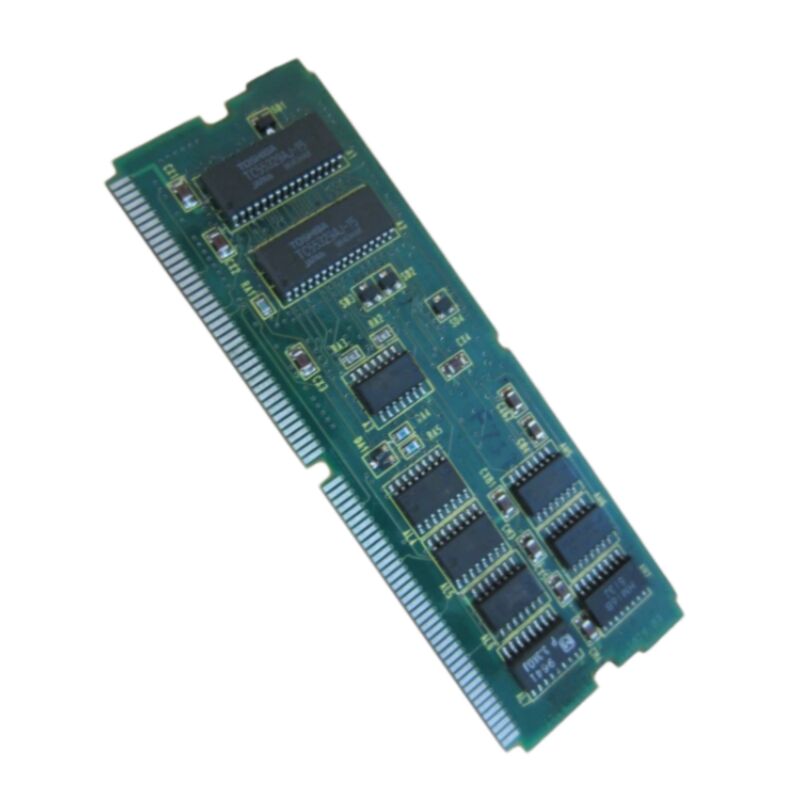
FANUC A20B-2902-0070 2-Axis Servo Control PCB
Product Description
The FANUC A20B-2902-0070 is a PCB designed for 2-axis servo control in CNC and industrial automation systems.
Identified as a DSPV/RJ 16/18 Serial Servo SMD Board, this model is relevant to service environments where stable axis coordination, board-level replacement accuracy, and control continuity are essential.
In practical industrial use, a servo control PCB is not simply a support board.
It is part of the motion-related control structure that helps organize how servo axes are managed within the machine. When a board in this category begins to fail, the result can go far beyond a simple alarm condition. Maintenance teams may see unstable axis response, interruption in coordinated motion behavior, or difficulty restoring the original control performance of the machine.
That is why the A20B-2902-0070 is best suited to buyers who need an exact FANUC board reference for repair, spare stock, or legacy system support.
For facilities operating older but still productive CNC equipment, using the correct servo control PCB is often more practical than redesigning part of the motion-control section.
In maintenance planning, board-level accuracy helps reduce troubleshooting time and supports a cleaner recovery path.
Industrial Application Notes
This PCB is commonly considered for:
- CNC servo control repair
- 2-axis motion-control maintenance
- FANUC board replacement
- Automation spare parts inventory
- Legacy machine service support
Technical Parameter Table
| Item |
Value |
| Brand |
FANUC |
| Part Number |
A20B-2902-0070 |
| Model Number |
A20B29020070 |
| Product Type |
PCB |
| Board Function |
2-Axis Servo Control |
| Design |
DSPV/RJ |
| Board Type |
16/18 Serial Servo SMD Board |
| Control Field |
CNC |
| Application Range |
Automation |
| Typical Use |
Repair, Replacement, Spare Stock |
Technical Significance
Because the A20B-2902-0070 is tied to 2-axis servo control, it matters in applications where precise and repeatable axis behavior is part of everyday machine operation.
A board of this type is often evaluated not only by whether it fits physically, but by whether it supports the original control logic and motion structure already built into the machine.
A similar-looking board may still differ in control assignment or machine relationship. In industrial service workflows, the correct FANUC part number is often the best way to limit risk and maintain system integrity.
FAQ
1. What is the main role of the A20B-2902-0070 in a CNC system?
The A20B-2902-0070 serves as a 2-axis servo control PCB within a CNC-related control structure. In industrial terms, this means it is associated with the way two servo axes are handled inside the machine’s control environment.
Boards of this type are important because servo performance depends not only on motors and amplifiers, but also on the board-level logic that supports axis-related control behavior.
2. Why does a 2-axis servo control board require exact replacement?
In motion-control applications, the board is usually integrated into a specific control architecture.
Even if another PCB appears similar, it may not carry the same function, communication relationship, or control assignment.
Using the exact A20B-2902-0070 part number helps maintain the original machine structure and reduces the risk of extended troubleshooting, startup instability, or mismatched board behavior after installation.
3. What kind of maintenance situations typically lead to replacing this PCB?
Replacement is often considered when a machine shows axis-related instability, board-level failure, or control issues that point toward the servo section of the electronic system. In service practice, a technician may investigate control alarms, abnormal motion response, or repeated operating faults before concluding that the PCB should be replaced.
4. Is this board only relevant for older FANUC machines?
Not necessarily, but it is especially important in installed systems where the original control platform is still active and productive. Many factories continue to operate legacy CNC equipment successfully, and in those cases exact servo control boards remain highly valuable.
Maintaining the correct board family is often more economical than retrofitting the motion-control section, particularly when the machine is still meeting production needs.
5. What should an engineer verify before ordering A20B-2902-0070?
The engineer should confirm the exact part number on the installed board, review the machine’s fault symptoms, and check whether the issue truly relates to the servo control PCB rather than surrounding cabling, amplifier conditions, power quality, or upstream control hardware. Industrial troubleshooting is most effective when replacement decisions are based on both part identification and fault analysis rather than appearance alone.


 Your message must be between 20-3,000 characters!