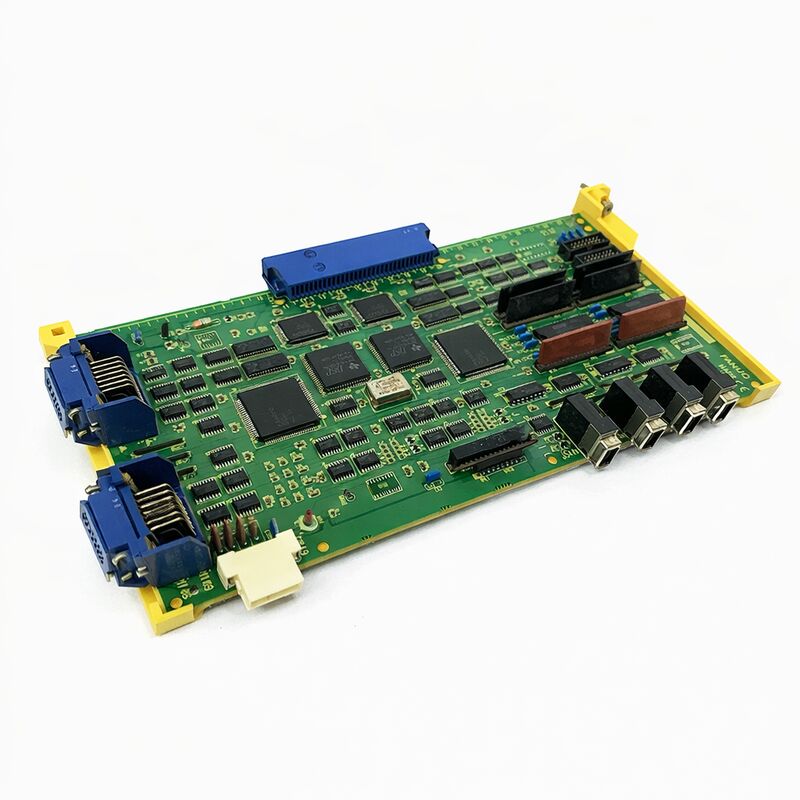
FANUC A16B-2203-0691 αi Servo Module Wiring PCB for aiSV1-20
Overview
The A16B-2203-0691 is an αi servo module wiring PCB used with aiSV1-20 amplifier hardware. It is described as the board normally fitted on single-axis A06B-6114 αiSV series modules, and parts channels also identify it as a PCB for ALPHA-i SERVO SVM1-20I.
That places it in the internal amplifier wiring/control section rather than in the CNC main-board or communication-board layer.
This board is not a general-purpose spare. It belongs to the internal structure of the αi servo module and is tied to the amplifier family it is fitted into. In maintenance work, boards in this position are matched by exact amplifier role and installed module type, because the board supports the internal electrical structure of the servo amplifier rather than a broad external controller function.
A maintenance-manual listing also links A16B-2203-0691 with αi SV 20 configurations in the A06B-6117-H103 / C103 range, while the product description cited above ties it to single-axis A06B-6114 aiSV modules.
In practice, that means the exact installed amplifier model and board label should always be checked on the hardware before ordering.
Technical Data
| Parameter | Value |
|---|
| Part Number | A16B-2203-0691 |
| Manufacturer | FANUC |
| Product Type | Wiring PCB / Servo Module PCB |
| Product Series | A16B-2203 |
| Board Role | αi servo module wiring PCB |
| Module Context | aiSV1-20 / SVM1-20i |
| Amplifier Association | Single-axis A06B-6114 aiSV modules; αi SV 20 manual references |
| Related Control Card Context | Often listed alongside FSSB control card A16B-2101-004x in module descriptions |
Applications
This board is suitable for installed FANUC αi servo amplifier modules that already use the A16B-2203-0691 internal wiring-board position.
It is especially relevant in servo-module repair, board-level refurbishment, and amplifier restoration where the original module hardware remains largely intact but the internal PCB needs replacement.
It is particularly useful when the power section and heatsink assembly remain serviceable, but the internal module board requires replacement to restore the original amplifier structure.
In that setting, matching the same wiring PCB helps preserve the existing module architecture and fitted control-card arrangement.
Selection Guide
When selecting A16B-2203-0691, first confirm the board code directly on the installed PCB and then verify the amplifier model where it is fitted.
This step matters because the same board family appears across multiple αi servo module variants, and nearby models may be used on different current or axis configurations.
Second, check the amplifier designation itself.
The strongest board description connects this model with aiSV1-20 and single-axis A06B-6114 modules, while manual references also connect it with αi SV 20 listings.
That means the most reliable selection method is the actual fitted-board code plus the installed amplifier label together.
Third, review the board context inside the module. Some listings note that the servo module is fitted with this wiring board together with an FSSB control card A16B-2101-004x, which can help when visually confirming the installed amplifier internals during service.
Replacement Guidance
Before ordering, confirm the board label, the amplifier model, and the exact module type where it is installed. On internal servo-module boards, those three checks are more reliable than trying to identify the board only from a broad servo family description.
If the amplifier has already been repaired before, it is also wise to compare the current installed board markings with the machine records.
Older servo modules can carry replacement boards from earlier service work, so direct hardware verification is the safest path.
FAQ
Q1: What kind of board is A16B-2203-0691?
It is an αi servo module wiring PCB. In practical terms, it belongs inside the amplifier module and supports the internal board structure of the servo unit rather than serving as a general controller or display board.
Q2: Why is “aiSV1-20” important in the description?
Because it identifies the amplifier-side role of the board. A board fitted in an aiSV1-20 module should be selected to preserve that same installed amplifier configuration, not just by matching the broader FANUC board family.
Q3: Why should the amplifier model be checked before buying?
Because board families like this can appear across several αi amplifier variants. The exact installed module label helps confirm whether the board belongs to the same current, axis, and module structure already in service.
Q4: Is this the complete servo amplifier?
No. It is a PCB used inside the servo amplifier module, not the full amplifier assembly. That distinction is important because the replacement should match the internal board role inside the existing amplifier, not the whole drive as a complete unit.
Q5: What should be checked before buying?
Check the board label, confirm the amplifier type, and verify the installed module context. On internal amplifier boards, that combination gives a much safer match than relying only on a broad family description.


 Your message must be between 20-3,000 characters!