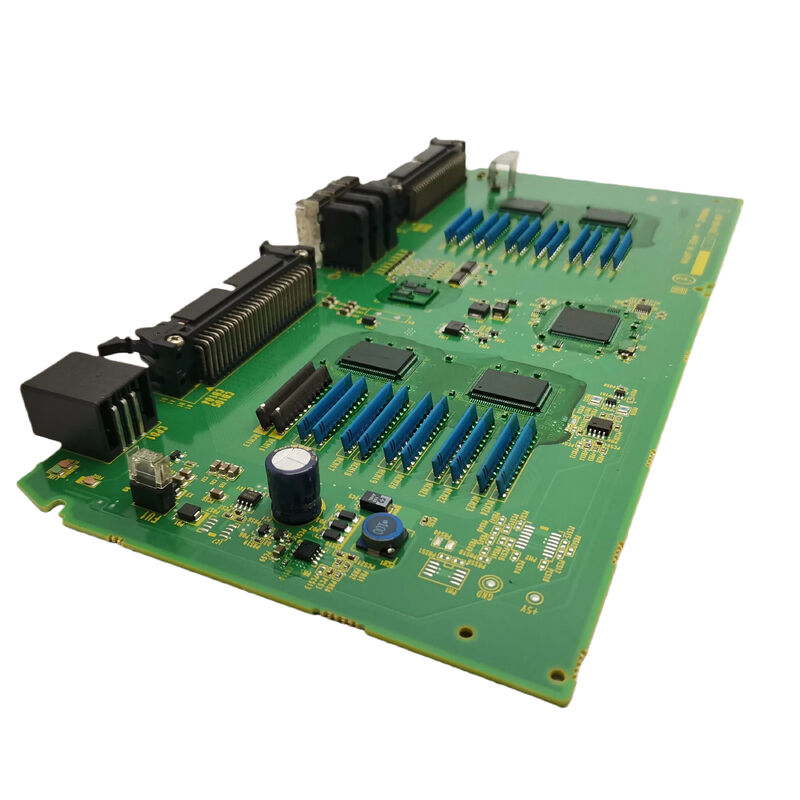
FANUC A16B-2200-0840 | Main CPU A PCB — R-J Robot Controller / MC68020 / 4MB SRAM / 2MB Flash / Discontinued
The Intelligence Core of the R-J Robot Controller
The A16B-2200-0840 is the Main CPU A board for FANUC's R-J robot controller — the generation that preceded the R-J2 and R-J3 series in the FANUC robotics lineage. On this board sits a 20 MHz Motorola MC68020 processor, the same 32-bit architecture that powered industrial automation controllers throughout the late 1980s and early 1990s. The 4 MB battery-backed SRAM holds robot system data, ladder logic, and programme files during power-off; the 2 MB flash carries the core system firmware.
The board runs standard R-J configurations from 2 to 8 robot axes, covering the range from simple 3-axis positioners to full 6-axis articulated robots and 7-axis or 8-axis systems with auxiliary axes. The specific axis configuration in service is determined by the robot type and the installed axis control cards, not by the CPU A board itself.
The "A" designation in Main CPU A distinguishes this board from adjacent variants in the A16B-2200 family — the Main CPU B (A16B-2200-0841) and Main CPU D (A16B-2200-0843). Each letter suffix identifies a board with a specific configuration difference. Confirm "A" from the installed board's own label before ordering.
Key Specifications
| Parameter |
Value |
| Part Number |
A16B-2200-0840 |
| CPU |
20 MHz Motorola MC68020 |
| SRAM |
4 MB battery-backed |
| Flash |
2 MB |
| Axis Support |
2 / 3 / 4 / 6 / 8 |
| Controller |
FANUC R-J |
| Series |
A16B-2200 |
| Status |
Discontinued |
After Replacement — Full Reload Required
Replacing the A16B-2200-0840 requires a complete reload of all robot parameters and programmes. The replacement board arrives without the machine's specific configuration — all taught programmes, system parameters, tool frames, user frames, and I/O configuration must be restored from backup.
A confirmed current backup is not optional — it is mandatory before any main CPU board replacement. Without a backup, the robot's complete configuration must be rebuilt from documentation and re-taught, which is a significant undertaking on a production robot.
The SRAM backup battery is typically on the board itself. Confirm the battery status on a used or refurbished unit before installation.
FAQ
Q1: What does "Main CPU A" mean, and how does it differ from CPU B or CPU D?
The A, B, C, D letter suffixes in the A16B-2200-0840/0841/0843 series identify different hardware revision or configuration variants of the R-J main CPU board. Each letter identifies a board for a specific R-J controller configuration. Confirm the letter from the installed board's label before ordering — the boards are not interchangeable without confirming the specific letter variant for the installed controller.
Q2: Must all robot programmes be reloaded after replacement?
Yes. The replacement board contains no machine-specific data. All robot programmes, system parameters, tool/user frames, and I/O configurations must be restored from backup after installation. A current backup is essential before starting replacement. Without it, the robot requires full reprogramming.
Q3: The R-J controller shows a CPU board alarm. How is a CPU A board fault confirmed?
R-J controller alarms that affect all robot functions simultaneously at startup — particularly those preventing the controller from completing its boot sequence — point to the main CPU board. Alarms affecting only motion, I/O, or communication while the controller otherwise boots correctly are more likely in peripheral boards. CPU board replacement should be confirmed by fault isolation, not assumed from a single alarm code.
Q4: Can the A16B-2200-0840 from another R-J robot be used as a replacement?
Yes, provided the board carries the same suffix (CPU A = -0840), is confirmed functional before removal from the donor robot, and the robot's backup is used to restore the target machine's configuration. The board itself carries no machine-specific configuration — all data must come from the backup, not the donor robot's settings.


 Your message must be between 20-3,000 characters!