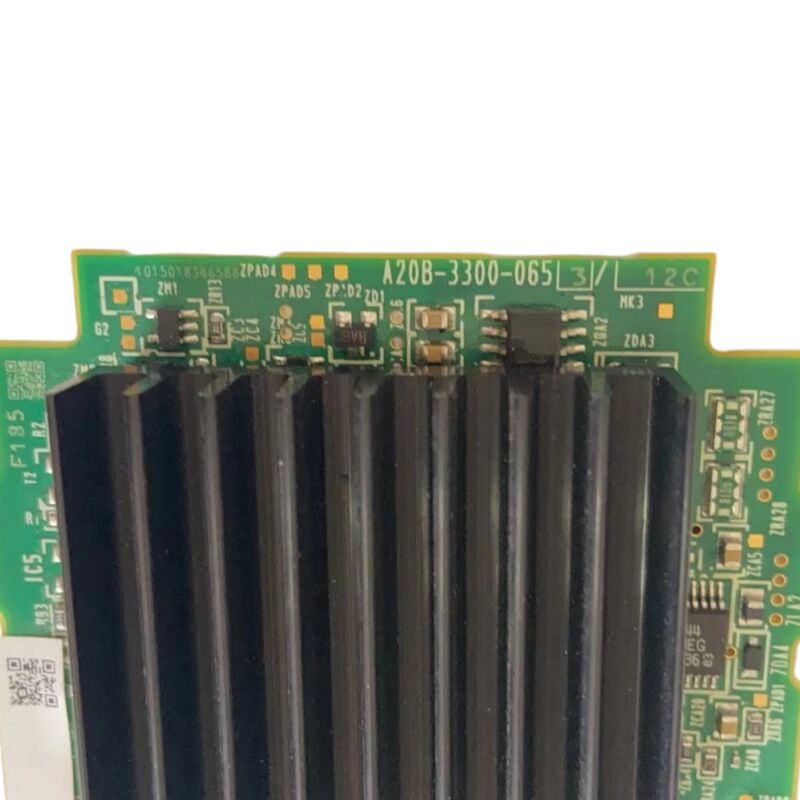
FANUC A20B-3300-0653 | A20B-3300 Series A2 CPU Module PCB — FANUC CNC Control Systems
A20B-3300 Series CPU Modules in FANUC CNC Architecture
The A20B-3300-0653 is a CPU module from FANUC's A20B-3300 board series — the family of processing modules used in FANUC CNC and robot control systems. The A20B-3300 family covers CPU processing cards, graphics modules, servo control cards, and high-speed memory modules. The -0653 is the A2 series CPU module variant within this family.
In a FANUC CNC control unit, the CPU module is the processing core. It executes the CNC system software loaded from the FROM memory modules, coordinates real-time tasks (axis interpolation, PMC ladder execution, operator interface processing, I/O management), and manages data flow between the control unit's functional boards. A failed CPU module produces a complete control system failure — the CNC does not boot or halts mid-cycle.
The A20B-3300 series modules plug into the main host PCB of the CNC control unit alongside other functional modules (FROM/SRAM memory, servo control cards, graphics modules). Each A20B-3300 suffix variant serves a specific function within this modular architecture — the -0653 CPU module occupies the processing core position.
Key Specifications
| Parameter |
Value |
| Part Number |
A20B-3300-0653 |
| Series |
A20B-3300 |
| Type |
A2 CPU Module |
| Origin |
Japan |
A20B-3300 Family — Suffix-Specific Selection
Multiple variants exist within the A20B-3300 family serving different functional positions:
- A20B-3300-0260 — 486DX MMX CPU module for 16i-A/18i-A/21i-A
- A20B-3300-0102 — RISC PowerPC CPU card for 16i/18i/21i
- A20B-3300-0653 — A2 series CPU module (this board)
Adjacent suffixes serve different CNC platform generations or different processing functions. Physical similarity between A20B-3300 variants does not indicate compatibility. Confirm the exact part number A20B-3300-0653 from the installed board's label before sourcing a replacement.
Replacement — Data Backup Before Removal
The CPU module does not store CNC parameters — those reside in the SRAM memory module. However, confirm the specific machine's architecture before assuming data-free board swap applies. Always back up all CNC data (parameters, PMC ladder, programmes) before removing the original CPU module, regardless of whether the backup is expected to be needed.
After fitting the replacement, verify the CNC boot sequence completes normally and check for any CPU-version-related alarm codes before returning the machine to production.
FAQ
Q1: What does the A20B-3300-0653 do in the CNC control unit?
It is the A2 series CPU module — the central processing board that executes the CNC system software, manages real-time control tasks, and coordinates data flow between the control unit's functional modules. A failed CPU module causes complete control system failure: the CNC cannot boot or stops mid-operation.
Q2: Can other A20B-3300 variants substitute for the -0653?
No. Adjacent part numbers in the A20B-3300 family serve different functional positions or different CNC platform generations. Physical similarity does not indicate compatibility. Always confirm A20B-3300-0653 specifically from the installed board's label.
Q3: What should be checked before concluding the CPU module has failed?
Verify control power supply voltages at the board — a failing power supply produces identical symptoms to a CPU failure at a fraction of the replacement cost. Check all connector seating (backplane, memory modules). Review the CNC's boot-stage diagnostic LED states against the maintenance manual to identify the exact fault stage before ordering a replacement board.
Q4: Does replacing the CPU module require CNC parameter re-entry?
CNC parameters reside in the SRAM memory module, not in the CPU module. If the SRAM module transfers intact to the replacement CPU board, parameters are retained. Verify the machine's specific architecture — and always maintain a current backup regardless.
Q5: Where is the A20B-3300-0653 sourced?
Through the FANUC CNC board aftermarket — A20B-3300 series module dealers and CNC repair specialists. Confirm the -0653 suffix specifically. For a production-critical machine, consider holding a verified spare on-site — CPU module failure causes complete machine stoppage with no degraded-mode workaround.


 Your message must be between 20-3,000 characters!