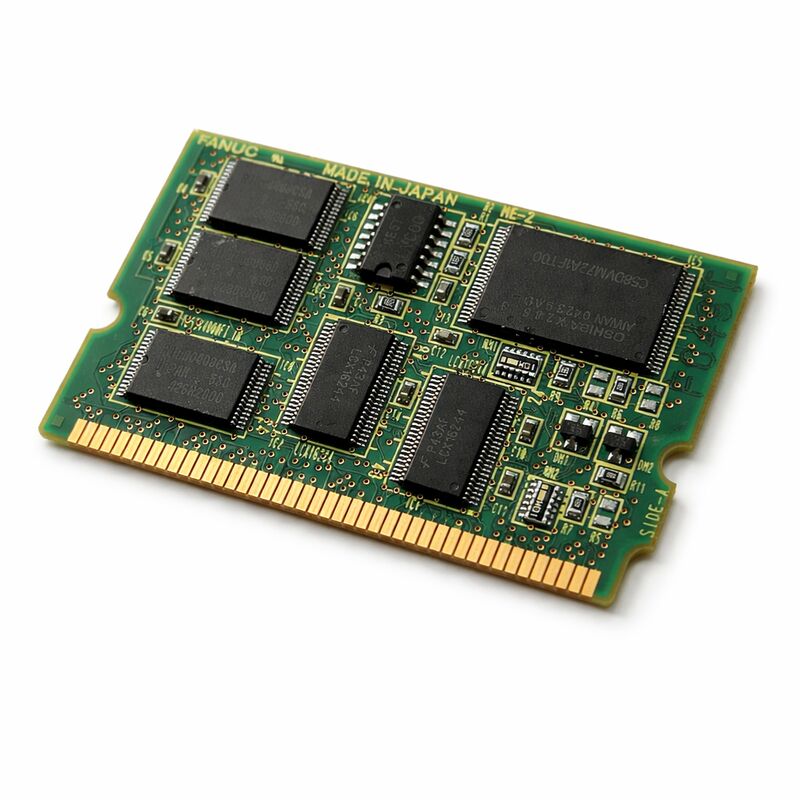
FANUC A20B-3900-0161 16 MB Memory Board with 2 ROM
Product Description
The FANUC A20B-3900-0161 is a memory board identified with 16 MB capacity and 2 ROM, making it a clearly defined board-level part for industrial control and CNC electronic service. In maintenance environments, memory boards with specific capacity and configuration markings are usually sourced by exact model number because even small differences in board identity can matter in the installed hardware structure.
This board is particularly relevant where a service team needs to support an existing FANUC system without introducing uncertainty into the original electronic arrangement.
When a machine depends on a known memory-board configuration, exact-number replacement is often the preferred approach.
It supports better continuity in repair workflows and helps technicians keep the restoration process aligned with the installed system.
The note that this part has been described as discontinued by manufacturer increases its maintenance significance rather than reducing it.
In industrial practice, discontinued boards often remain important for many years because the installed equipment continues operating long after catalog production status has changed.
For spare-parts buyers, that means a board like A20B-3900-0161 can be highly relevant for legacy equipment support, stock preparation, and controlled repair planning.
Technical Parameter Table
| Item |
Value |
| Brand |
FANUC |
| Part Number |
A20B-3900-0161 |
| Model Number |
A20B39000161 |
| Product Type |
Memory Board |
| Memory Capacity |
16 MB |
| ROM Configuration |
2 ROM |
| Board Category |
Industrial Control PCB |
| Product Status Note |
Discontinued by Manufacturer |
| Application Field |
CNC / Automation / Industrial Electronics |
| Typical Use |
Repair, Replacement, Spare Stock |
FAQ
1. What makes the A20B-3900-0161 different from a general memory board?
The A20B-3900-0161 is not just a generic memory board category. It is identified by a specific FANUC part number together with a defined memory marking of 16 MB and 2 ROM. In industrial control systems, those identifiers matter because the installed hardware often depends on exact board configuration rather than on a broad memory-board label.
For service engineers, this makes the part-number match especially important.
2. Why is discontinued status important for buyers?
Discontinued status means the board may no longer be in regular manufacturer supply, but it can still be critical in the field if the equipment remains in operation.
In industrial maintenance, this often increases the value of the board because sourcing becomes more time-sensitive once a failure occurs.
Buyers who support legacy FANUC systems often treat discontinued boards as strategic service items rather than routine parts.
3. Is a 16 MB memory board still useful in older industrial equipment?
Yes. In legacy control systems, the usefulness of a memory board is not determined by modern computing standards but by whether it matches the original machine design.
A 16 MB board can still be essential if the installed control architecture was built around that configuration.
For many plants, preserving the original board arrangement is a more efficient path than attempting a redesign.
4. Why should the 2 ROM configuration be noted during replacement?
Because board-level configuration details can be part of what distinguishes one memory board from another.
Even if two boards fall into the same general category, their configuration markings may reflect differences that are relevant to service accuracy.
In practical maintenance work, details such as the stated ROM arrangement help buyers and technicians reduce ambiguity when matching the replacement to the installed board.
5. What should be checked before ordering A20B-3900-0161?
A buyer should confirm the exact FANUC number on the original board, compare the visible memory/configuration markings where possible, and review the machine’s repair context.
It is also wise to determine whether the issue truly lies in the memory board or in a related electrical or control section.
A careful check improves ordering accuracy and helps avoid unnecessary downtime caused by mismatched replacement.


 Your message must be between 20-3,000 characters!