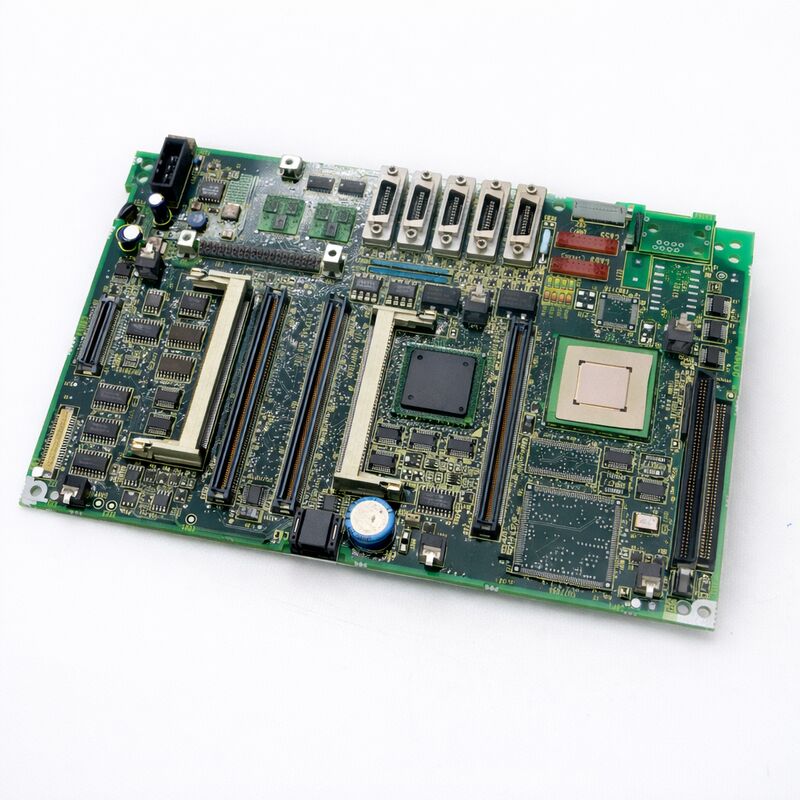
FANUC A20B-8100-0137 | Series 21i-A LCD-Mounted Main PCB — PMC-SA1 / 5 μs/step / 5000 Ladder Steps
21i-A LCD-Mounted Architecture
The A20B-8100-0137 is the main PCB for the FANUC Series 21i-A in the LCD-mounted configuration. In the LCD-mounted design, the CNC's main control board integrates into the rear of the LCD/operator panel assembly — the main PCB and display are a combined physical unit rather than the separate control unit and panel assembly used in standalone rack-mounted designs. The two configurations share the same 21i-A CNC platform but differ in physical packaging.
This LCD-mounted main PCB handles all core 21i-A CNC functions: CNC software execution, PMC ladder execution, I/O management, operator interface processing, and coordination of the control unit's functional modules. A failed main PCB causes complete control system failure.
Key Specifications
| Parameter |
Value |
| Part Number |
A20B-8100-0137 |
| Compatible CNC |
Series 21i-A |
| Installation |
LCD-mounted |
| PMC |
PMC-SA1 |
| Instruction Speed |
5 μs/step |
| Max Ladder Steps |
5,000 |
| Series |
A20B-8100 |
PMC-SA1 — The Compact PMC Option for This Board
The PMC version embedded in this board is the PMC-SA1: 5 μs/step instruction execution and a maximum of 5,000 ladder steps. This distinguishes it from the PMC-SA5 variant, which provides higher execution speed and greater ladder capacity.
For a 21i-A machine equipped with PMC-SA1 from the original build, the A20B-8100-0137 is the like-for-like replacement that preserves the original PMC configuration. Replacing with a board carrying PMC-SA5 technically increases capability but changes the PMC environment — if the installed machine's ladder was written and tuned for SA1 behaviour, introducing SA5 without review is not a simple drop-in.
A 5,000-step ladder limit accommodates the typical automation logic for small to medium machine tools: tool change sequences, safety interlock logic, operator panel response, and machine mode management comfortably fit within this capacity for straightforward machining centre and lathe applications.
Not Interchangeable with SA5 or Standalone Main PCBs
Three compatibility checkpoints before ordering:
- PMC version: A20B-8100-0137 = PMC-SA1. Confirm the installed board's PMC version before sourcing.
- Installation style: LCD-mounted boards do not interchange with standalone (separate rack) main PCBs even within the same 21i-A family.
- CNC series: This board is 21i-A specific. The 16i-A/18i-A and 21i-B generations use different main PCB part numbers.
FAQ
Q1: What is the difference between PMC-SA1 and PMC-SA5?
Both are embedded PMC versions in the 21i-A main PCB family. PMC-SA1 (this board) provides 5 μs/step instruction speed with a 5,000-step maximum ladder capacity. PMC-SA5 provides faster instruction execution and larger ladder capacity. They are not interchangeable without verifying that the installed machine's ladder programme is compatible with the SA5 environment.
Q2: What is an LCD-mounted main PCB, and how does it differ from a standalone board?
In the LCD-mounted design, the CNC main PCB integrates into the rear of the LCD/operator panel unit — board and display are a combined physical assembly. In standalone designs, the main PCB is in a separate control rack cabinet. Both use the same 21i-A CNC platform but different physical hardware. LCD-mounted and standalone main PCBs are not physically interchangeable.
Q3: Does replacing the A20B-8100-0137 require CNC data backup?
Yes. Back up all CNC data — parameters, PMC ladder, tool data, programmes — before removing the original board. CNC parameters reside in the SRAM memory modules, not in the main PCB itself, but a complete backup protects against any data loss during the replacement procedure. The replacement board arrives with factory defaults.
Q4: What should be checked before concluding the main PCB has failed?
Check the control power supply voltages — a failing power supply produces identical symptoms. Verify all connector and memory module seating. Check the boot-stage diagnostic LED states against the 21i-A maintenance manual to identify the specific fault stage. A boot that stalls at the display initialisation stage and shows no LEDs advancing may indicate power supply issues before the main PCB.
Q5: Is the A20B-8100-0137 compatible with the 21i-B or 16i-A?
No. The A20B-8100-0137 is specific to the 21i-A LCD-mounted configuration. The 21i-B, 16i-A, and 18i-A use different main PCB series. The 21i-B uses different board numbering even in the same A20B-8100 family. Confirm the installed CNC is Series 21i-A and that the existing main PCB is A20B-8100-0137 before ordering.


 Your message must be between 20-3,000 characters!