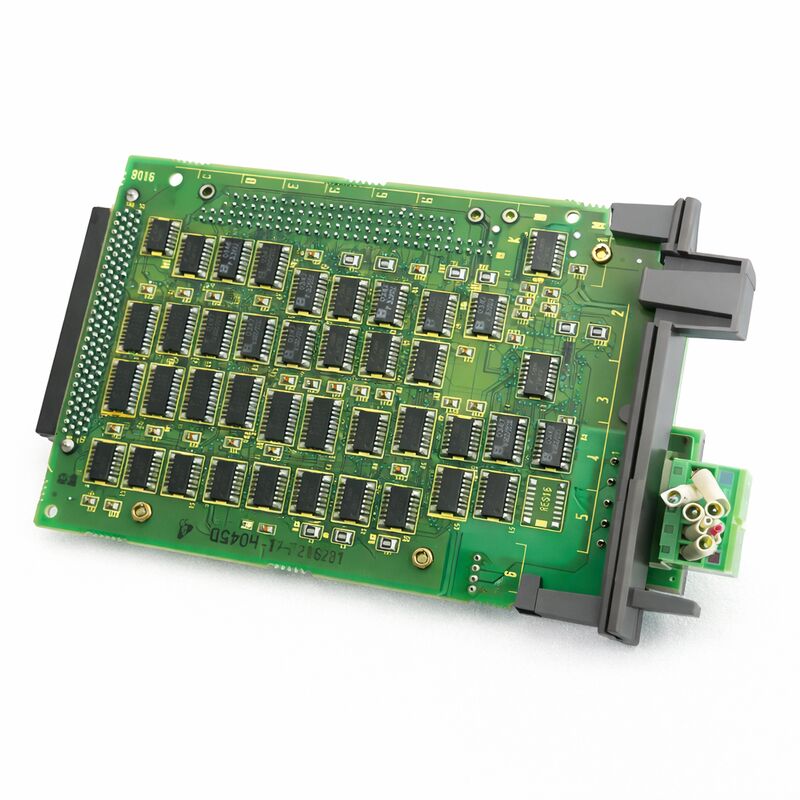
FANUC A20B-8101-0240 | A20B-8101 Series DeviceNet Communication Interface PCB
DeviceNet Communication at the Board Level
The A20B-8101-0240 is a DeviceNet communication interface PCB — the board that provides a DeviceNet network connection within a FANUC CNC or robot controller. DeviceNet is an industrial fieldbus protocol from the CIP (Common Industrial Protocol) family, widely used in North American and global automation environments to connect PLCs, drives, sensors, and other field devices over a shared serial network. When a FANUC controller is integrated into a machine or production cell that uses DeviceNet for I/O, device configuration, or inter-controller communication, a board like this is the hardware that makes that integration possible at the controller's communication layer.
Unlike the controller's main PCB (which processes CNC functions) or memory modules (which store programs and parameters), this is a protocol-specific interface board. Its entire function is defined by the network protocol it supports — DeviceNet in this case — and its role in the installed system is determined by the network configuration that was set up when the machine or cell was originally built.
This matters for replacement work. A board that handles a specific protocol at a specific network address carries configuration that is tied to the existing system. Replacing the A20B-8101-0240 with a different communication board type — even one that physically fits the same slot — changes the communication protocol and breaks the network integration without a full system reconfiguration. Like-for-like replacement is required.
Key Specifications
| Parameter |
Value |
| Part Number |
A20B-8101-0240 |
| Series |
A20B-8101 |
| Type |
DeviceNet communication PCB |
| Protocol |
DeviceNet (CIP family) |
| Origin |
Japan |
DeviceNet Network Configuration After Replacement
The A20B-8101-0240 stores no CNC axis parameters or part programs. After physical replacement, the controller's DeviceNet configuration — node address, data mapping, and any scanner-side settings — must be verified or reloaded to restore the original network behaviour. The controller's CNC parameters (axis settings, servo parameters) are stored in the SRAM/FROM memory modules and are unaffected by a communication board swap.
FAQ
Q1: What does the A20B-8101-0240 do in a FANUC controller?
It provides the DeviceNet network interface. The board handles communication between the FANUC controller and the DeviceNet network it is connected to — sending and receiving I/O data, device status, and configuration messages according to the DeviceNet protocol. Without this board, a controller configured for DeviceNet communication cannot participate in that network.
Q2: Can a different A20B-8101 communication board substitute for the -0240?
Only if it provides the same DeviceNet protocol interface. Different suffixes in the A20B-8101 series serve different communication protocols or different network configurations. A board for a different protocol cannot serve the DeviceNet role the -0240 provides. Confirm the -0240 part number from the installed board's label before ordering any replacement.
Q3: Does replacing the A20B-8101-0240 require CNC parameter changes?
CNC axis parameters and programs are stored in the SRAM/FROM memory modules, not in this communication board — those are unaffected by the swap. However, the DeviceNet network configuration (node address, I/O data mapping, scanner settings) must be verified and restored after replacement to ensure the controller resumes its original role on the network.
Q4: How is a DeviceNet node address set on the A20B-8101-0240?
The node address for FANUC DeviceNet boards is configured through the FANUC controller's network settings rather than physical DIP switches on the board. The address must match what the DeviceNet scanner (the master device on the network) expects for this node. After replacement, verify the node address setting before bringing the controller back online on the network.
Q5: Where is the A20B-8101-0240 sourced?
Through the FANUC CNC and robot controller aftermarket — communication PCB specialists and FANUC parts dealers. Confirm the -0240 part number specifically and verify the board provides DeviceNet interface capability (not another CIP-family protocol such as EtherNet/IP, which uses different hardware). ESD-safe handling and antistatic packaging are required for transport and storage.


 Your message must be between 20-3,000 characters!