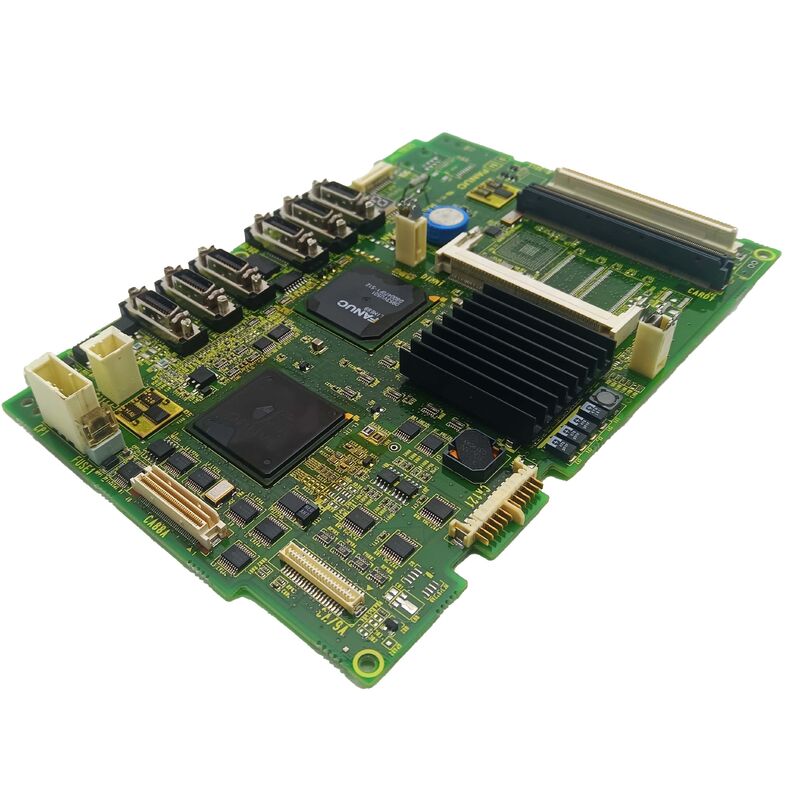
FANUC A20B-8200-0760
10.4-Inch Display Control PCB for CNC Visual Interface Systems
Core Product Description
The FANUC A20B-8200-0760 is a 10.4-inch display control PCB developed for reliable visual control functions in electronic and CNC-related systems.
In practical industrial use, a board of this type serves as a key element between the display hardware and the control environment, helping maintain stable screen operation, readable interface output, and dependable visual feedback for the operator.
Display control boards are often underestimated until a machine begins showing screen-related faults such as unstable image response, dim startup behavior, loss of display communication, or irregular interface performance.
In real service conditions, these symptoms can interrupt production even when the main control remains functional, because a machine that cannot present clear operational information is difficult to run, diagnose, or recover.
The A20B-8200-0760 is therefore best understood as a functional display-side PCB used to support HMI visibility and screen-level control integrity.
For repair teams and industrial buyers, it is a targeted replacement part for systems where maintaining original display architecture is more practical than redesigning the operator interface section.
Product Highlights
- Designed for 10.4-inch display control applications
- Suitable for visual control and operator interface support
- Useful in repair, replacement, and maintenance stock
- Helps restore stable screen-side control performance
- Practical for existing FANUC system servicing
Typical Use Environment
| Item |
Details |
| Part Number |
A20B-8200-0760 |
| Brand |
FANUC |
| Product Type |
Display Control PCB |
| Display Size |
10.4 inch |
| Main Function |
Visual control / display interface support |
| Typical Use |
Maintenance, repair, replacement |
FAQ
Q1: What is the main role of the A20B-8200-0760 in a machine system?
The A20B-8200-0760 functions as a display control PCB, meaning it supports the screen-related control path inside the equipment.
In industrial terms, that usually involves helping the display section operate correctly so the operator can view alarms, menus, system status, and machine information.
If this board fails, the machine may still power up, but usable screen output can become unstable or unavailable.
Q2: Why is a display control board important in CNC and industrial equipment?
A machine interface is more than a convenience. It is a working part of the operating system.
When the visual interface becomes unreliable, routine actions such as parameter checks, alarm review, screen navigation, and status confirmation become much harder.
For maintenance engineers, a stable display board is essential because diagnosis often depends on readable and consistent on-screen information.
Q3: What symptoms can suggest this board should be inspected or replaced?
Typical symptoms include no display, partial screen response, unstable brightness behavior, irregular visual output, startup display failure, or screen-related faults that remain after the LCD panel and basic power conditions have already been checked.
In field service, this board becomes a likely suspect when the issue is clearly inside the display-control chain rather than the main machine logic.
Q4: What should technicians verify before installing a replacement display PCB?
They should confirm the exact part number, inspect connector alignment, check the LCD and backlight section, and make sure the problem is not caused by cable damage or inverter-side failure.
It is also wise to examine the cabinet environment for contamination, poor cooling, or power instability, because display boards can be affected by long-term heat and electrical stress.
Q5: Is this kind of board usually purchased for new builds or aftermarket support?
In most cases, it is more relevant to aftermarket support, machine repair, and spare-parts planning.
Many industrial systems continue operating for years, and replacing a dedicated display control PCB is often the most efficient way to restore operator usability without changing the original control design.


 Your message must be between 20-3,000 characters!