logo
Guangzhou Sande Electric Co.,Ltd.
Email Sales01@sande-elec.com TEL: 86--18620505228
Home > Products > Industrial Servo Motor >
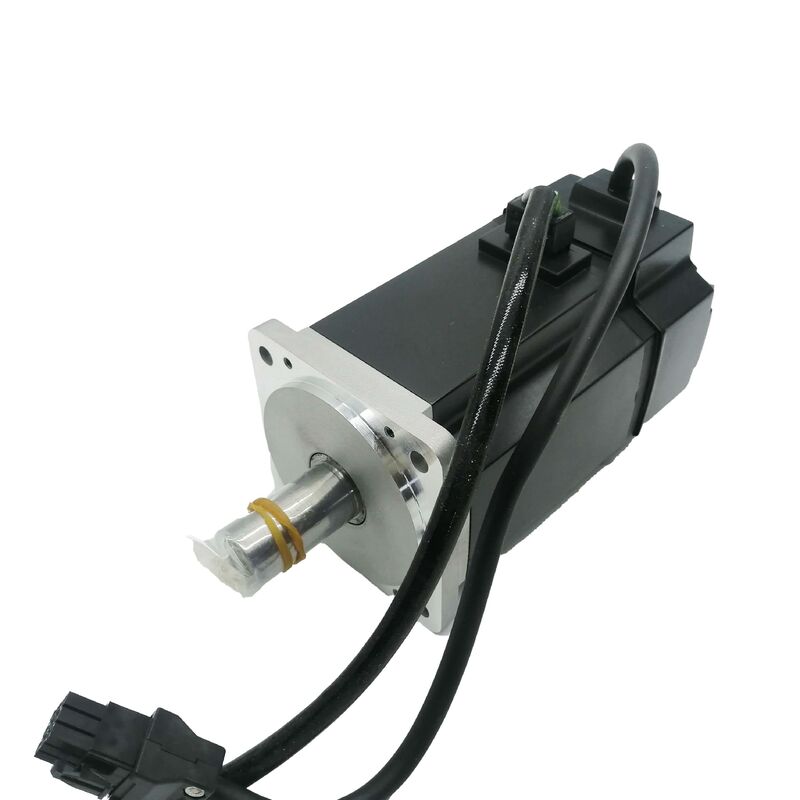
New HC-KFS73K Mitsubishi HCKFS73K Servo Motor Free Expedited Shipping
  • New HC-KFS73K Mitsubishi HCKFS73K Servo Motor Free Expedited Shipping
  • New HC-KFS73K Mitsubishi HCKFS73K Servo Motor Free Expedited Shipping

New HC-KFS73K Mitsubishi HCKFS73K Servo Motor Free Expedited Shipping

Place of Origin JAPAN
Brand Name MITSUBISHI
Certification CE ROHS
Model Number HC-KFS73K
Product Details
Condition:
New Factory Seal (NFS)
Item No.:
HC-KFS73K
Origin:
JAPAN
Weight:
3.6 KG
Dimension:
31 X 10 X 17 Cm
Highlight: 

mitsubishi industrial servo motor

,

mitsubishi yaskawa ac servo motor

Payment & Shipping Terms
Minimum Order Quantity
1 pcs
Packaging Details
original packing
Delivery Time
0-3 days
Payment Terms
T/T,PayPal,Western Union
Supply Ability
100 pcs/day
Product Description

Mitsubishi HC-KFS73K AC Servo Motor — 750W, Keyed Shaft, 17-Bit Absolute Encoder, MELSERVO MR-J2S

Brand: Mitsubishi Electric 

Series: MELSERVO HC-KFS

Platform: MR-J2S

Part Numbers: HC-KFS73K / HCKFS73K

New in Original Packaging | Free Expedited Shipping | In Stock


Low Inertia, High Torque, One Detail That Changes Everything

Most of the specs between the HC-KFS73 and the HC-KFS73K are identical — same 750W output, same 2.4 N·m rated torque, same 17-bit absolute encoder, same amplifier, same flange. What separates them is a single mechanical detail on the output shaft: a keyway with a key.

That distinction is not cosmetic. A keyed shaft transmits torque through a positive mechanical interlock between the motor shaft and the driven component — a pulley, sprocket, coupling hub, or gear — rather than through friction clamping alone. In applications where the coupling sees high peak loads, frequent direction reversals, or vibration that would cause a clamped hub to creep over time, the keyed interface is the engineering choice that keeps the mechanical assembly in position across thousands of operating hours. If the machine was designed to accept a keyed motor shaft, there is no alternative that fits correctly without modifying the coupling hardware.

This is a 750W low-inertia servo motor from Mitsubishi Electric's MELSERVO J2S platform. It is designed for responsive, repeatable motion in compact machine envelopes — and it ships with exactly the shaft geometry that the machines built around it require.


Technical Specifications

Parameter Value
Rated Output 750W (0.75 kW)
Supply Voltage 200V AC class
Rated Current 5.8A
Peak Current 18.6A
Rated Torque 2.4 N·m
Peak Torque 7.2 N·m
Rated Speed 3,000 r/min
Maximum Speed 4,500 r/min
Instantaneous Maximum Speed 5,175 r/min
Encoder Type Absolute, 17-bit (131,072 ppr)
Flange Size 80 × 80 mm
Shaft Keyed (with key included)
Electromagnetic Brake None
Cooling Method Fan cooling
Protection Rating IP55
Ambient Temperature (Operation) 0°C to +40°C
Storage Temperature −15°C to +70°C
Altitude Max. 1,000m above sea level
Weight 3.0 kg
Inertia Class Low inertia / small capacity
Compatible Amplifiers MR-J2S-70A / MR-J2S-70B / MR-J2S-70CP / MR-J2S-70CL
Series Platform MELSERVO MR-J2S
OEM Status Discontinued

Specifications sourced from Mitsubishi Electric Factory Automation Americas official product page (HC-KFS73K) and the MELSERVO-J2-Super Servo Amplifiers & Motors catalog (L03007D).


Low Inertia vs. Ultra-Low Inertia — Understanding Where the HC-KFS73K Sits

Mitsubishi Electric's HC series organizes its servo motors into distinct inertia classes, and the distinction is worth understanding before selecting a motor for a new design or evaluating a replacement.

The HC-MFS series (Ultra-Low Inertia) carries the smallest rotor inertia values in the HC lineup and was built specifically for the fastest possible acceleration and deceleration in very high-cycle applications with light loads. Its moment of inertia values are minimized at the expense of rotor mass.

The HC-KFS series (Low Inertia) — the family this motor belongs to — occupies the next tier. It offers lower inertia than medium-inertia motors while supporting somewhat larger load masses and a broader range of mechanical coupling options. At the HC-KFS73K's 750W rating, the low-inertia rotor still responds quickly to commanded velocity changes, but the motor is also physically suited to applications that involve more substantial connected loads — conveyors, X-Y tables, gantry axes, and multi-axis handling equipment where the moved mass is non-trivial.

The practical implication for maintenance users is that a machine designed for an HC-KFS73K cannot simply substitute an HC-MFS73K without mechanical and possibly parameter consideration — the inertia class affects the motor's dimensional characteristics and coupling geometry, not just its dynamic performance. Like-for-like replacement means the same series, same suffix, same part number.


The Keyed Shaft — Mechanical Function and Why It Exists

A keyway is a rectangular slot machined along the length of the motor output shaft. A matching slot is machined into the bore of the coupling hub or pulley. A precision-ground rectangular steel key fits into both slots simultaneously, bridging the gap between shaft and hub and creating a positive rotational interlock that does not depend on clamping force.

The engineering reasons for specifying a keyed shaft over a plain shaft come down to the nature of the load:

When torque is transmitted through pure friction — a clamped hub on a smooth shaft — the maximum transmissible torque is a function of the clamping force and the coefficient of friction between the surfaces. Under sustained high torque, peak loads during acceleration, shock loads from the driven mechanism, or vibration over long operating periods, the hub can rotate incrementally on the shaft. Each micro-slip event moves the hub slightly, and over time the coupling slips far enough to cause a position error, a mechanical failure, or both.

A keyed shaft eliminates slip entirely. The mechanical interlock transmits torque through shear in the key, not through friction in the fit. Backlash in a properly fitted keyed coupling is essentially zero, and the torque capacity of the joint is determined by the shear strength of the key material rather than by clamping force. For a 750W motor running at up to 5,175 r/min instantaneous maximum speed with 7.2 N·m peak torque available, that is the appropriate coupling design in many real-world applications.

The key itself is included with the motor — installation requires only proper key seating in both slots before the coupling hub is assembled onto the shaft.


17-Bit Absolute Encoder — No Homing Required at Startup

The built-in 17-bit encoder in the HC-KFS73K generates 131,072 distinct position values per revolution and retains full absolute position data through power-off cycles. The practical operating consequence of this is immediate: when the machine powers on, the servo controller already knows exactly where each axis equipped with this motor is positioned, without any axis movement required to establish a reference.

For machines with multiple axes, complex fixtures, or vertical axes where a homing motion could cause problems if initiated incorrectly, the elimination of the homing cycle is a genuine operational and safety benefit. It also reduces cycle time at the start of each production shift — axes are ready to run as soon as the servo system is powered and initialized, not after completing a sequential home return.

The resolution itself — 131,072 positions per revolution — translates to sub-arc-minute angular resolution at the motor shaft. Through any mechanical reduction to the load, that resolution multiplies further. For applications that need fine position control over the full output travel, the encoder does not become the limiting factor in the motion system's accuracy.


Compatible Servo Amplifiers

The HC-KFS73K is matched with the MR-J2S-70 amplifier family. All four interface variants support the same motor; the choice is made by the machine's control bus architecture:

Amplifier Control Interface
MR-J2S-70A Pulse train — position, speed, and torque modes
MR-J2S-70B SSCNET — serial synchronous network, multi-axis
MR-J2S-70CP PROFIBUS-DP
MR-J2S-70CL CC-Link

On machines that were built with SSCNET multi-axis control and an MR-J2S-70B driving the HC-KFS73K, the motor replacement involves only the motor — the amplifier, cabling, and system parameters remain unchanged. The same applies to any other interface variant. The amplifier configuration is stored in the amplifier and controller, not in the motor.

If the machine's existing amplifier is functional, do not replace it as part of a motor swap unless it has been independently identified as the cause of the fault.


HC-KFS73 Family — Variants at a Glance

The HC-KFS73 was produced in several shaft and brake combinations, all sharing the same core 750W, 2.4 N·m, 3,000 r/min specification:

Model Shaft Brake
HC-KFS73 Straight No
HC-KFS73K Keyed No
HC-KFS73B Straight Yes (electromagnetic)
HC-KFS73BK Keyed Yes (electromagnetic)

This listing is the HC-KFS73K: keyed shaft, no electromagnetic brake. The correct variant for any specific machine is determined by what the original part number label on the motor nameplate reads — matching that exactly is the only reliable approach to like-for-like replacement.


Where the HC-KFS73K Gets Used

The combination of low inertia, 750W output, 80mm flange, and keyed shaft maps clearly to a set of machine types and axis types where all of those attributes are simultaneously relevant.

Conveyor and transfer line drives — belt-driven axes where the motor shaft connects directly to a drive pulley via a keyed pulley bore. These applications involve sustained torque against a moving belt load, direction reversals at index positions, and cycles that repeat thousands of times per shift. The keyed coupling handles the sustained and reversal torque; the low-inertia rotor handles the quick position settling at each index.

X-Y tables and gantry positioning systems — where ball screw or timing belt drive axes require a precise coupling between motor and drive element, and where the axis must move quickly and settle accurately at each target point across thousands of cycles.

Printing, labeling, and web tension control — register-critical applications where the motor shaft position must be tightly coupled to the driven roller or nip without the angular error that hub slip would introduce over a production run.

Robotic and automated assembly — joint actuators and positioning axes on earlier-generation automation equipment built around the MR-J2S platform, where the HC-KFS73K was the specified motor for a given axis configuration.

Packaging machinery — cross-seal jaw drives, form-fill-seal axes, and rotary infeed equipment where consistent phase relationship between the motor and the driven cam or mechanism is maintained through the keyed coupling interface.


Condition, Sourcing, and Shipping

Mitsubishi Electric discontinued the full HC-KFS series alongside the broader retirement of the MR-J2S platform. The part is no longer in active manufacture and is unavailable through Mitsubishi's authorized distribution network. New-in-box units available today are original factory production stock that was warehoused before the line closed — never installed, never powered up, in sealed Mitsubishi Electric factory packaging.

For equipment maintenance where the machine was originally built around the HC-KFS73K, this is the direct replacement path. The unit ships new, in original Mitsubishi packaging, with the key included. Free expedited shipping is included on this listing. International orders ship via DHL Express, FedEx International Priority, or UPS Express with full tracking from dispatch to delivery. In-stock units are dispatched the same business day for orders received before the daily carrier cutoff.


FAQ

Q1: The shaft on my existing motor is plain (no keyway), but the machine uses a clamped coupling hub. Can I substitute the HC-KFS73K keyed version without modifying the machine?

Not without replacing or modifying the coupling hub. The HC-KFS73K's keyed shaft requires a coupling hub with a matching keyway machined into its bore — a plain-bore hub designed for a smooth shaft will not correctly accommodate the key, and forcing assembly would damage the key seat or leave the key proud of the shaft surface where it cannot clear the hub bore. If the machine's existing coupling is a plain-bore clamped type designed for the HC-KFS73 (straight shaft), the correct replacement is the HC-KFS73 straight shaft version. If the machine uses a keyed coupling hub — which is why the HC-KFS73K was specified originally — then the HC-KFS73K is the correct replacement and the existing hub will accept it directly.


Q2: How is the HC-KFS73K different from the HC-MFS73K? Both are 750W Mitsubishi servo motors with keyed shafts.

Both motors share the same rated output (750W), the same 17-bit absolute encoder, and a keyed shaft configuration, but they belong to different inertia classes and use different amplifiers. The HC-KFS73K is a low-inertia motor from the HC-KFS series, compatible with the MR-J2S-70 amplifier family. The HC-MFS73K is an ultra-low inertia motor from the HC-MFS series, compatible with the MR-J2S-70 amplifier family as well, but with a significantly lower rotor moment of inertia. The two motors also differ in rated current (HC-KFS73K: 5.8A; HC-MFS73K: 5.1A) and in their physical dimensions, making them non-interchangeable at the flange and coupling level without machine modification. In a maintenance context, replace the failed motor with the exact same part number from the motor nameplate — do not substitute across inertia series, even at the same wattage.


Q3: Does the HC-KFS73K require any external cooling, or is it self-sufficient?

The HC-KFS73K uses fan cooling — an internal fan built into the motor assembly circulates air across the motor's thermal elements during operation. This is distinct from the self-cooled (totally enclosed, no forced ventilation) construction used in some other HC series variants. Fan-cooled motors are fully self-contained in terms of their cooling requirement — no external air supply, water cooling circuit, or forced airflow from the machine enclosure is needed. The motor generates its own airflow internally. What the installation does need to provide is an environment within the motor's rated ambient temperature range (0°C to +40°C) with adequate clearance around the motor body for the fan's heat dissipation to function effectively. Do not install the motor in a sealed enclosure that traps the heat the fan is designed to dissipate.


Q4: The motor has no electromagnetic brake. What holds the axis in position when the machine is stopped or powered down?

Without a built-in brake, the HC-KFS73K holds position exclusively through active servo control — the amplifier energizes the motor windings to maintain the commanded position while the servo is enabled. When the servo is disabled or power is removed, there is no mechanical restraint on the motor shaft. Whether this is acceptable depends entirely on the application: horizontal axes with balanced loads present no problem when the servo is disabled, since there is no force driving the axis to move. Vertical axes or axes with an unbalanced load are the common case where the no-brake configuration requires additional consideration — either a counterbalance in the machine design, a separate external brake, or use of the HC-KFS73BK (keyed shaft, with electromagnetic brake) variant that provides mechanical shaft locking on power removal.


Q5: Can the MR-J2S-70A amplifier driving the HC-KFS73K be replaced with a current-generation MR-J4 amplifier?

A direct cable-and-power swap between an MR-J4 amplifier and the HC-KFS73K motor is not possible without adaptation hardware, because the MR-J4 uses a different encoder communication protocol than the HC-KFS73K's built-in encoder. Mitsubishi Electric developed a documented migration path using MR-J4-DU_B-RJ020 servo amplifiers combined with MR-J2S renewal tool cabling kits, which allows MR-J4 drives to control certain older HC-series motors. If an amplifier platform upgrade is being evaluated for an existing machine using HC-KFS73K motors, confirm the specific renewal tool compatibility with Mitsubishi Electric technical support before committing to the hardware purchase — amplifier software version and renewal tool part number must be matched correctly for the combination to function. For a straightforward motor replacement where the existing MR-J2S-70 amplifier is functional, replacing the motor alone with another HC-KFS73K is the faster and lower-risk path.


New HC-KFS73K Mitsubishi HCKFS73K Servo Motor Free Expedited Shipping 0


Contact Us at Any Time

+86 18620505228
10/F,Jia Yue Building, Chebei Road,Tianhe district,Guangzhou,China
Send your inquiry directly to us