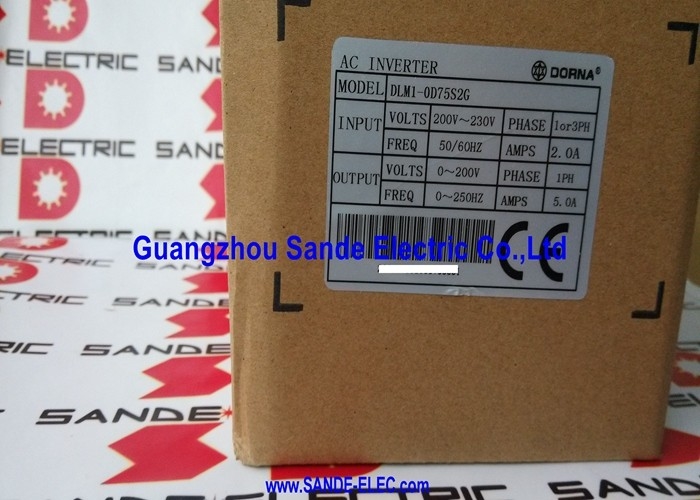
DLM1-0D75S2G | Variable Frequency Drive — 0.75 kW / Single-Phase 220V AC / 2A Input / 5A Output / 50/60Hz / General Purpose
0.75kW on a Single-Phase Supply — Compact VFD for General Machine Use
The DLM1-0D75S2G is a 0.75kW (three-quarter kilowatt) variable frequency drive designed for single-phase AC 220V input. It converts the single-phase 220V mains supply into a variable-frequency, variable-voltage three-phase output for controlling AC induction motor speed. This makes it useful in small machine tools, workshop equipment, conveyor sections, fans, and pump systems where the mains supply is single-phase and the motor is three-phase.
Variable frequency drives change the speed of AC motors by adjusting both the frequency and voltage delivered to the motor. Running the motor at 30Hz instead of 50Hz reduces the motor speed to 60% of its rated value. Reducing the frequency also reduces the voltage proportionally (V/Hz control), keeping the motor's magnetic flux constant and torque stable across the speed range. This variable-speed capability replaces mechanical speed adjustment methods — gearboxes, pulleys, and throttling valves — with electronic control that responds directly from the drive's parameter settings or an analogue setpoint.
The 5A output current rating matches a standard 0.75kW three-phase motor at 220V. The 2A input current draws from the single-phase 220V supply — approximately 440W of input power, consistent with the 0.75kW output at typical inverter efficiency.
Key Specifications
| Parameter |
Value |
| Part Number |
DLM1-0D75S2G |
| Input |
Single-phase AC 220V, 50/60Hz |
| Rated Input Current |
2A |
| Rated Output Power |
0.75 kW |
| Rated Output Current |
5A |
| Input Type |
Single Phase (S2) |
| Application |
General Purpose (G) |
Single-Phase In, Three-Phase Out
A common installation scenario for the DLM1-0D75S2G is in small workshops or machine tools where only a single-phase 220V supply is available at the machine location but the motor is a standard three-phase induction motor. The drive performs the phase conversion internally — it rectifies the single-phase AC to DC, then inverts the DC to a three-phase AC output at the commanded frequency. The motor sees a balanced three-phase supply regardless of the single-phase input.
This single-phase input capability allows standard three-phase motors to be used without a phase converter or three-phase supply infrastructure.
FAQ
Q1: Can the DLM1-0D75S2G run a motor at variable speed, or does it only switch between fixed speeds?
The DLM1-0D75S2G provides continuous variable speed control across its output frequency range. Speed can be set by a front panel potentiometer or keypad, or by an external analogue setpoint signal (0–10V or 4–20mA) from a controller. The motor speed follows the commanded frequency continuously — it is not limited to fixed speed steps.
Q2: What size motor can the DLM1-0D75S2G drive?
The drive is rated for a 0.75kW three-phase motor at 220V with a full-load current up to 5A. Do not connect a motor with a nameplate current exceeding 5A — the drive's output transistors would operate in overload. For motors rated below 0.75kW, the drive functions correctly with headroom to spare.
Q3: Does the drive protect the motor from overload?
Variable frequency drives typically include electronic motor overload protection — the drive monitors output current and trips if current exceeds the configured threshold for longer than the configured time. Set the drive's motor rated current parameter to the motor's nameplate full-load current value. This activates the overload trip function at the correct threshold for the installed motor.
Q4: Is acceleration time adjustable?
Yes. Most VFDs in this class include adjustable acceleration and deceleration ramp times. Acceleration time determines how long the drive takes to ramp from 0Hz to the target frequency; deceleration time controls the ramp down. Slow acceleration reduces the starting current surge and mechanical stress on the motor and driven machine. Confirm the available parameter range from the drive's user documentation.
Q5: What happens when the drive's rated output current is exceeded?
The drive detects the overload condition through its output current monitoring circuit and either reduces output frequency (current limiting) or trips and displays a fault code, depending on its overload response parameter setting. Frequent tripping indicates the connected motor load regularly exceeds 5A — confirm the drive power rating matches the application's actual motor load before running in production.


 Your message must be between 20-3,000 characters!