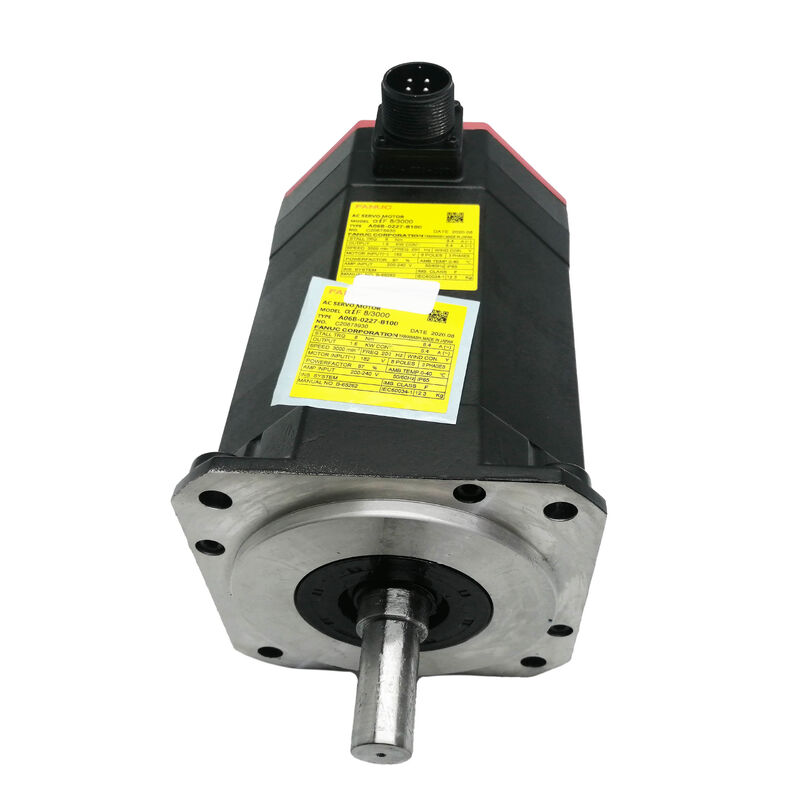
Fanuc AC Servo Motor A06B-0227-B100
There's a reason Fanuc-equipped shops are reluctant to swap out components for cheaper alternatives — and the A06B-0227-B100 is a prime example of why that loyalty makes practical sense. This isn't a motor you buy because it looks good on a spec sheet. You buy it because the machine it goes into was designed around it, and putting anything else in that slot introduces variables that nobody on the shop floor has time to deal with.
Motor Specifications & Application
The A06B-0227-B100 belongs to Fanuc's AiF (Alpha i F-series) servo motor lineup — built specifically for CNC feed axis applications where demand is continuous, tolerances are tight, and downtime is expensive. The "8" in AiF8 refers to the motor's torque class, and the 3000 RPM rating is its continuous rated speed.
This combination places it squarely in the range of what you'd find driving a standard feed axis on a vertical machining center or turning center — not a light-duty application, not a specialty spindle, just solid, workhorse motion control doing its job.
System Integration
Fanuc designed the AiF series to integrate directly with their αi-series servo drive amplifiers through the FSSB (Fanuc Serial Servo Bus) communication protocol. This integration ensures axis response feels different on a native Fanuc system versus one patched together with mixed components. The encoder feedback is high-resolution serial, the drive and motor are tuned for each other from the factory, and the CNC knows it's communicating with exactly the hardware it expects.
Durability & Construction
One thing that stands out about motors in this class — when they're maintained properly, they last. The AiF series uses Fanuc's own encoder design, which is built into the motor rather than bolted on as an afterthought. This matters for vibration resistance and signal integrity, especially in environments where coolant mist, chips, and thermal cycling are part of the daily routine.
The SLK configuration on this unit specifies the shaft type and connector arrangement — details that matter significantly when fitting the motor to a specific machine design. Not every A06B motor shares the same mechanical interface, and getting that wrong wastes valuable time.
Common Replacement Scenarios
This motor typically surfaces in one of two situations: a machine throwing persistent SV alarm codes that drive replacement hasn't resolved, or a planned rebuild where a shop is refreshing an aging machining center before the motor fails unexpectedly.
In diagnostic cases, the path usually starts at the drive, moves to cabling, and ends at the motor when everything else checks out clean. Position error faults, thermal alarms, or erratic axis behavior that tracking and tuning can't stabilize are classic signs.
Frequently Asked Questions
Which Fanuc drive amplifier does this motor work with?
The A06B-0227-B100 is designed for use with Fanuc αi-series servo amplifiers. The specific amplifier module — current rating and axis count — depends on your machine configuration. Always verify against your machine's electrical drawings before purchasing a replacement amplifier alongside the motor.
After swapping this motor, what does the startup process look like on the controller?
Physical installation is the straightforward part. On the CNC side, you'll need to confirm motor parameters are correctly set — encoder type, torque limits, and axis-specific tuning values. If you have a parameter backup from before the failure, restoration is quick. Without one, you'll need the machine builder's original parameter documentation.
Is 3000 RPM the operating speed or the maximum speed?
It's the rated maximum. Your actual axis speed in operation depends on the mechanical reduction ratio between the motor and the axis — ballscrew pitch, gearbox ratio, and so on. Most CNC feed axes run this motor well below the 3000 RPM ceiling during normal cutting. Sustained operation at maximum speed isn't typical and isn't recommended for long-term motor health.
Can a failed encoder on this motor be replaced separately?
Technically possible, but not straightforward. Fanuc encoders are proprietary and paired to the motor — replacement requires sourcing the correct encoder unit and proper reinstallation, including any positional calibration the motor needs afterward. For most shops, a full motor replacement is the more reliable path unless you have a specialist doing the encoder work.
How do I confirm this is the right part for my machine?
The most reliable method is checking your machine's parts list or the motor nameplate on the unit being replaced. The full part number — including the B100 suffix — needs to match exactly. Partial matches on the base number aren't sufficient; different suffixes indicate different shaft configurations, connector types, or winding specs that may not be interchangeable.



 Your message must be between 20-3,000 characters!