logo
Send Message
Guangzhou Sande Electric Co.,Ltd.
Email Sales01@sande-elec.com TEL: 86--18620505228
Home > Products > Industrial Servo Motor >
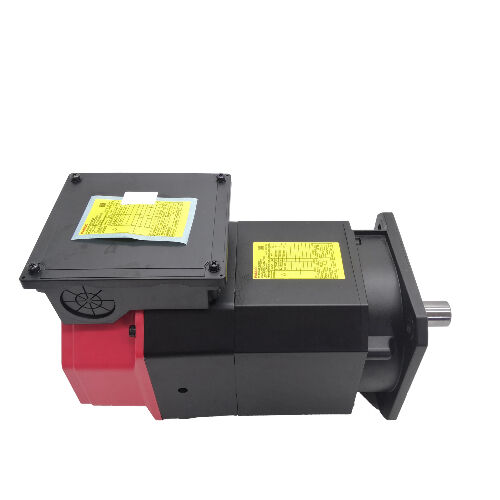
Fanuc AC Servo Motor A06B-1405-B103 A06B1405B103 AO6B-14O5-B1O3
  • Fanuc AC Servo Motor  A06B-1405-B103  A06B1405B103 AO6B-14O5-B1O3

Fanuc AC Servo Motor A06B-1405-B103 A06B1405B103 AO6B-14O5-B1O3

Place of Origin JAPAN
Brand Name FANUC
Certification CE ROHS
Model Number A06B-1405-B103
Product Details
Condition:
NEW / USED
Item No.:
A06B-1405-B103
Origin:
JAPAN
Certificate:
CE
Highlight: 

a06b ac servo motor fanuc

,

a06b fanuc ac servo motor

,

fanuc ac ac servo motor fanuc

Payment & Shipping Terms
Minimum Order Quantity
1 pcs
Packaging Details
original packing
Delivery Time
0-3 days
Payment Terms
T/T,PayPal,Western Union
Supply Ability
100 pcs/day
Product Description

Fanuc A06B-1405-B103 | Alpha i Series AC Spindle Motor Ai 3/10000 — 3.7/5.5kW, Flange Mount, Slick Shaft, MZi Sensor, Rear Exhaust

Part Number: A06B-1405-B103

Type: AC Spindle Motor

Series: Alpha i (αi)

Model: Ai 3 / 10000

Configuration: Flange Mount, Plain Slick Shaft, MZi Speed/Position Sensor, Rear Exhaust Cooling

Speed Range: 1,500 – 10,000 RPM

Supply Voltage: 156–220 VAC, 3-Phase

Condition: New / Refurbished / Surplus


Overview

The Fanuc A06B-1405-B103 is an Alpha i series AC spindle motor — model Ai 3/10000 — delivering 3.7 kW continuous and 5.5 kW in duty-cycle operation across a speed range of 1,500 to 10,000 RPM.

Configured with a flange mount, plain slick shaft, MZi feedback sensor, and rear exhaust cooling, this is the mid-range compact member of Fanuc's Alpha i 10,000 RPM spindle family — positioned above the Ai 2/10000 and below the larger Ai 8/8000 in the same architectural generation, sharing the same mounting footprint and amplifier interface while delivering the higher continuous power output that its spindle application class requires.

At 10,000 RPM maximum and 5.5 kW peak output, the A06B-1405-B103 is sized for compact machining centres, drill-tap centres, and small turning centres where spindle speed range and thermal stability take priority over raw torque.

The plain slick shaft exports torque to the machine's spindle mechanism without a keyway — relying on clamping force at the coupling interface — which at this power level is appropriate for the belt and coupling arrangements compact machine spindles use, and which simplifies the rotational balance of the shaft assembly.

The MZi sensor provides the speed and position feedback that makes oriented stop, Cs-axis control, and rigid tapping all functional on the CNC controls this motor runs with.


Key Specifications

Parameter Value
Rated Output (S1 Continuous) 3.7 kW
Rated Output (S2 / S3 Duty) 5.5 kW
Speed Range 1,500 – 10,000 RPM
Supply Voltage 156–220 VAC
Phase 3-Phase
Poles 4
Mounting Flange
Shaft Type Slick (Plain, No Keyway)
Sensor MZi Speed and Position
Cooling Rear Exhaust
Approximate Weight 47 kg (105 lbs)
Series Alpha i — Ai3/10000

The Ai 3/10000 in the Alpha i Spindle Range

The Ai 3/10000 sits at a deliberately useful point in the Alpha i spindle motor lineup — one step above the Ai 2/10000 (A06B-1404 series) and comfortably below the Ai 8/8000 (A06B-1407 series).

At 3.7 kW continuous and 5.5 kW in short-duty cycles, it serves the class of small to medium CNC machine tools where spindle power is adequate for the workpiece and tooling sizes typically encountered, but where 10,000 RPM access enables the high surface speeds that deliver good productivity on aluminium, non-ferrous alloys, and smaller-diameter carbide tooling.

The 4-pole motor design at 156–220VAC is consistent with the Alpha i spindle family architecture for this power class.

Four poles allow the motor to reach 10,000 RPM at an electrical frequency achievable by the Alpha i spindle amplifier, while maintaining the torque density needed for cutting at the lower end of the speed range from 1,500 RPM upward.

The 1,500 RPM lower bound defines the constant-power zone of operation. Below 1,500 RPM the motor transitions into constant-torque territory — useful for low-speed drilling, tapping, and turning operations where maximum torque at reduced speed is the governing parameter.

Above 1,500 RPM through to 10,000 RPM, rated power is maintained across the speed range by the spindle amplifier's field-weakening control. For the machine tools this motor serves, this operating envelope covers the full range of productive spindle speeds without restriction.


Slick Shaft — Clean Drive Interface at 10,000 RPM

The plain slick shaft of the A06B-1405-B103 exports torque from the motor to the driven mechanism entirely through clamping force.

There is no keyway, no mechanical interlock — the coupling hub, pulley, or spline element that connects the motor shaft to the spindle transmission holds through the radial clamping force of its bore on the shaft diameter.

This is a deliberate and appropriate design choice at this power class and speed ceiling. At 10,000 RPM, rotational balance of the shaft assembly becomes a meaningful parameter — any geometric discontinuity in the shaft, including a keyway slot, introduces a small imbalance that compounds with speed.

A slick shaft presents a clean, symmetric rotating surface. Coupling hubs and pulleys fitted to a slick shaft can be precision-balanced as a matched assembly.

At 5.5 kW peak power, the torque loading on the shaft coupling is modest compared to the larger spindle motor classes in the Alpha i range.

A correctly specified and properly installed coupling hub on a slick shaft handles the Ai 3/10000's torque without risk of slip under normal operating conditions.

Where the machine's transmission includes a belt drive, the coupling hub clamping specification must account for belt tension as well as transmitted torque — belt tension adds a radial load to the shaft that determines the appropriate bearing and coupling arrangement.


MZi Sensor — Feedback for Spindle Functions

The MZi fitted to the A06B-1405-B103 is a magnetic speed and position sensor at the rear of the motor. It generates the feedback signals the Alpha i spindle amplifier uses for speed loop control and for the machine tool spindle functions that require rotor position knowledge.

Speed regulation is the MZi's continuous role — every spindle speed command from the CNC is maintained by the amplifier's speed loop using MZi feedback. Spindle speed accuracy during a cutting pass depends on the MZi maintaining clean, noise-free signal output across the full 1,500–10,000 RPM operating range.

Oriented stop brings the spindle to rest at a defined angular position — essential for automatic tool changes, probing cycles, and workpiece loading procedures where the spindle must park at a specific angle and hold. This function depends entirely on the MZi's position reference.

Cs-axis control converts the spindle into a programmable positioning axis. On multi-function turning centres and mill-turn platforms, this allows the CNC to command spindle angle as a fifth axis, enabling milling, drilling, and tapping at arbitrary spindle positions in conjunction with programmed linear motion.

Rigid tapping synchronises spindle rotation and Z-axis feed at a fixed ratio throughout the threading cycle. The MZi provides the spindle rotation feedback that the CNC uses to maintain synchronism with the feed axis, producing consistent thread pitch without the compliance of a floating tap holder.


Rear Exhaust Cooling — Thermal Management by Design

Air drawn through the motor body exits from the rear — away from the spindle nose end, away from the spindle bearing zone, and out through the machine-side ducting. This rear exhaust arrangement separates the motor's generated heat from the dimensional stability region of the spindle assembly.

At 5.5 kW peak output, the Ai 3/10000 generates meaningful heat during sustained duty cycles.

If this heat were allowed to conduct or convect toward the spindle front bearings, it would drive differential thermal expansion of the spindle housing — causing the spindle centerline to migrate in the radial or axial direction as the machine warms up.

This thermal drift appears as dimensional inconsistency on parts machined at startup versus fully warmed operating temperature, and it is one of the harder spindle accuracy problems to diagnose because it develops gradually over the first hour of operation.

Rear exhaust design addresses this at the source. The motor's thermal output is directed backward through the cooling air path and exits the machine through rear ducting, not forward through the spindle bearing zone.

Machines that employ this arrangement reach their dimensional steady state faster after startup, maintain closer dimensional stability across long production runs, and show less warmup-related part dimension variation.


Amplifier and CNC Compatibility

The Ai 3/10000 is compatible with Fanuc's Alpha i spindle amplifier series — specifically the 6111, 6112, 6141, and 6142 series modules in the current class appropriate for 5.5 kW peak output. It integrates with Fanuc CNC platforms including Series 0i-B, 0i-C, 0i-D, 16i, 18i, and 30i/31i/32i.

The spindle amplifier motor type parameter must be set for the Ai 3/10000 and the MZi sensor interface enabled before the spindle is operated.

The #0P02 suffix variant of the same motor designates the MZi sensor-equipped version specifically — this is consistent with the standard B103 configuration.


FAQ

Q1: What is the difference between the A06B-1405-B103 (Ai 3/10000) and the A06B-1404-B103 (Ai 2/10000)?

Both motors share the same flange mount, slick shaft, MZi sensor, rear exhaust, and 1,500–10,000 RPM speed range.

The difference is power output: the Ai 2/10000 delivers 2.2 kW continuous / 3.7 kW S2-S3, while the Ai 3/10000 delivers 3.7 kW continuous / 5.5 kW S2-S3.

The physical frames are similar in configuration but the Ai 3/10000 is heavier at approximately 47 kg versus the lighter Ai 2/10000 frame. 

The spindle amplifier current class must be sized for the higher output of the Ai 3/10000 — the two motors are not interchangeable on the same amplifier module without confirming current capacity.


Q2: What spindle amplifier is required for the A06B-1405-B103?

The Ai 3/10000 is compatible with Fanuc Alpha i spindle amplifier modules from the 6111, 6112, 6141, and 6142 series, sized for 5.5 kW peak output. It integrates with Fanuc CNC controls including Series 0i-B, 0i-C, 0i-D, 16i, 18i, and 30i/31i/32i.

The amplifier must carry the correct motor type parameter for the Ai 3/10000 and have the MZi sensor interface enabled.

Confirm the amplifier's current class can support 5.5 kW before substituting the Ai 3/10000 for a lower-power variant on the same machine.


Q3: Does the slick shaft limit what spindle drive arrangements this motor can be used in?

The slick shaft is appropriate for belt-drive, coupling-drive, and integrated spindle cartridge arrangements where the driven component clamps onto the shaft diameter. It is not suitable for applications requiring a keyed connection — the A06B-1408-B153 (Ai 12/7000 keyed shaft variant) represents the keyed shaft option at higher power.

The slick shaft's primary advantage is rotational balance purity at 10,000 RPM: no keyway means no geometric discontinuity in the rotating shaft surface, which simplifies precision balancing of the shaft-coupling assembly.


Q4: What spindle CNC functions depend on the MZi sensor?

Oriented stop, Cs-axis (contour axis) operation, and rigid tapping all require functioning MZi feedback. Oriented stop locks the spindle at a defined angular position for tool changes and workpiece handling. Cs-axis allows the CNC to command spindle angle as a programmable axis for driven tool operations in turning centres.

Rigid tapping synchronises spindle rotation with Z-axis feed for accurate thread cutting without a floating holder. If the MZi sensor fails or produces intermittent output, these functions generate CNC alarms or fail to activate. Sensor air gap, pickup condition, and sensor ring integrity should all be checked during motor service.


Q5: What are the most important checks when evaluating a used A06B-1405-B103?

Check the slick shaft end for fretting marks from previous improper coupling installation or removal, and confirm there is no runout introduced by coupling hub damage. Inspect the MZi sensor assembly at the motor rear for mechanical damage to the pickup and verify the sensor ring is intact and correctly seated.

Measure winding resistance across all three phases for balance and check insulation resistance to earth — at 47 kg this motor is heavy enough that it has likely been installed and removed with mechanical handling equipment, so connection and winding integrity after handling events is worth verifying.

Confirm the rear exhaust path is unobstructed. A bench run-up at incremental speeds to 10,000 RPM with MZi signal monitoring and spindle amplifier current tracking is the correct final check before the motor is installed on a production machine tool.


Contact Us at Any Time

+86 18620505228
10/F,Jia Yue Building, Chebei Road,Tianhe district,Guangzhou,China
Send your inquiry directly to us