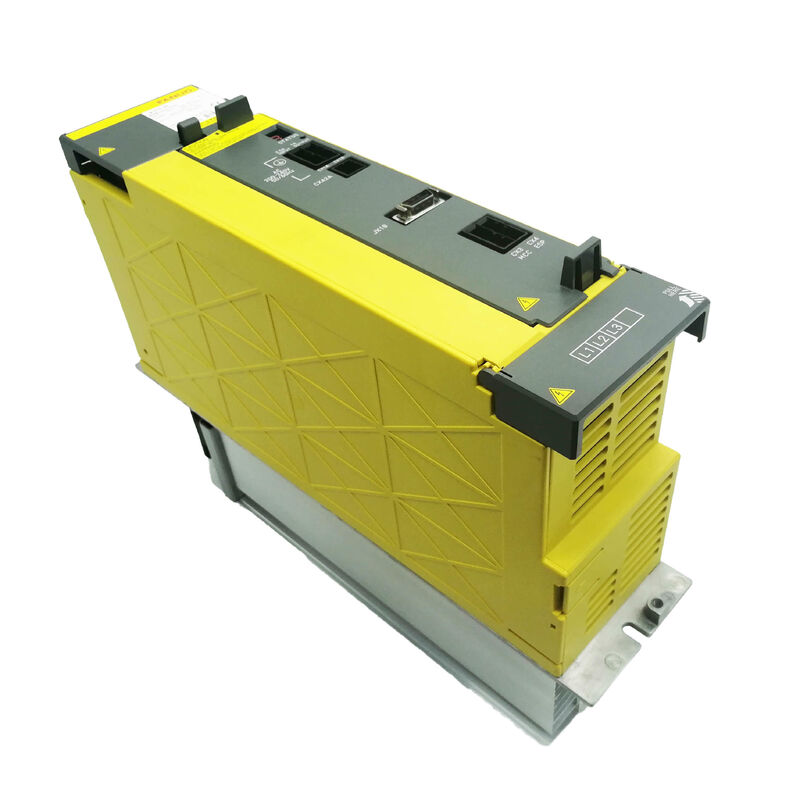
FANUC A06B-6110-H015 | Alpha i PSM-15i Power Supply Module — 17.5 kW / 200–240V AC / 283–325V DC / 3-Phase
DC Bus Foundation for Medium-Scale Alpha i Drive Cabinets
The A06B-6110-H015 is the PSM-15i — the 17.5 kW power supply module from FANUC's A06B-6110 Alpha i series. It accepts 200–230/240V AC three-phase input at 63A and produces the regulated 283–325V DC bus that all connected Alpha i servo amplifier modules (αiSVM) and spindle amplifier modules (αiSPM) draw from. This is the shared power foundation for the drive cabinet — not a single-axis drive.
The three power ratings reflect how the drive system operates in practice:
- 17.5 kW rated: Sustainable continuous output for normal production cycles
- 28 kW maximum: Sustained output available for short periods under peak demand
- 46 kW peak: Transient capability during simultaneous multi-axis acceleration
The peak figure is important for sizing: a cabinet with multiple axes accelerating simultaneously draws above the rated output for brief periods. The PSM-15i handles these transients without tripping, provided the continuous demand stays within the 17.5 kW rating.
The A06B-6110 series is the Alpha i generation equivalent to the earlier A06B-6087 Alpha PSM family. Both produce a 283–325V DC bus from 200–230V AC three-phase input, but the A06B-6110 series is matched to the Alpha i drive architecture (i-series CNC, FSSB amplifiers) rather than the original Alpha generation.
Key Specifications
| Parameter |
Value |
| Part Number |
A06B-6110-H015 |
| Designation |
PSM-15i |
| Rated Output |
17.5 kW |
| Max Output |
28 kW |
| Peak Output |
46 kW |
| AC Input |
200–230/240V, 3-phase, 63A at 200V |
| DC Bus Output |
283–325V |
| Status |
Discontinued |
PSM-15i in the Alpha i PSM Family
Within the A06B-6110 series, different H-suffix variants cover different output power ratings. The PSM-15i (H015) at 17.5 kW serves medium-scale drive cabinets with a mix of servo and spindle amplifiers. Selecting the correct PSM rating requires summing the continuous demand of all connected αiSVM and αiSPM modules. An undersized PSM trips on bus undervoltage during sustained production loading.
FAQ
Q1: What is the difference between the A06B-6110-H015 (PSM-15i) and the older A06B-6087 Alpha PSM series?
Both produce a 283–325V DC bus from 200–230V AC three-phase input and serve the same shared-bus architecture role. The A06B-6110 is the Alpha i generation — designed for the later i-series CNC platform with FSSB amplifiers. The A06B-6087 is the original Alpha generation. They are not interchangeable between drive generations, but the power supply function and bus voltage are equivalent within their respective drive systems.
Q2: What does the 17.5 kW / 28 kW / 46 kW rating distinction mean in practice?
The 17.5 kW is the sustainable continuous output. The 28 kW maximum handles sustained periods of above-rated demand. The 46 kW peak covers the brief transient during simultaneous multi-axis acceleration. Size the PSM based on the continuous demand of all connected modules — the peak and maximum ratings handle transients, but continuous operation above 17.5 kW will trip the module.
Q3: The PSM-15i shows a bus overvoltage alarm under normal load without heavy regenerative braking. What should be checked?
Bus overvoltage under normal conditions without heavy deceleration points to a fault in the active rectifier stage — an IGBT or gate drive circuit no longer regulating correctly. Do not reset and resume: an uncontrolled bus voltage rise can damage connected drive modules. The PSM requires service or exchange before returning the machine to production.
Q4: Does replacing the A06B-6110-H015 require CNC parameter changes?
No. The PSM stores no CNC parameters. After physical replacement, restore power and verify the DC bus voltage at the connected drive modules before enabling axes. Confirm all signal connections and the interface link to the drive chain are correctly seated before the first power-up.
Q5: How is the correct PSM capacity confirmed for a specific machine?
Sum the continuous current demand of all connected αiSVM servo modules and αiSPM spindle modules under typical production duty. This total continuous demand must fall within the PSM's 17.5 kW rated output. The 46 kW peak handles acceleration transients — but if the continuous demand consistently approaches 17.5 kW, the PSM is borderline sized and a higher-rated module would reduce thermal stress.



 Your message must be between 20-3,000 characters!