logo
Guangzhou Sande Electric Co.,Ltd.
Email Sales01@sande-elec.com TEL: 86--18620505228
Home > Products > Servo Motor Driver >
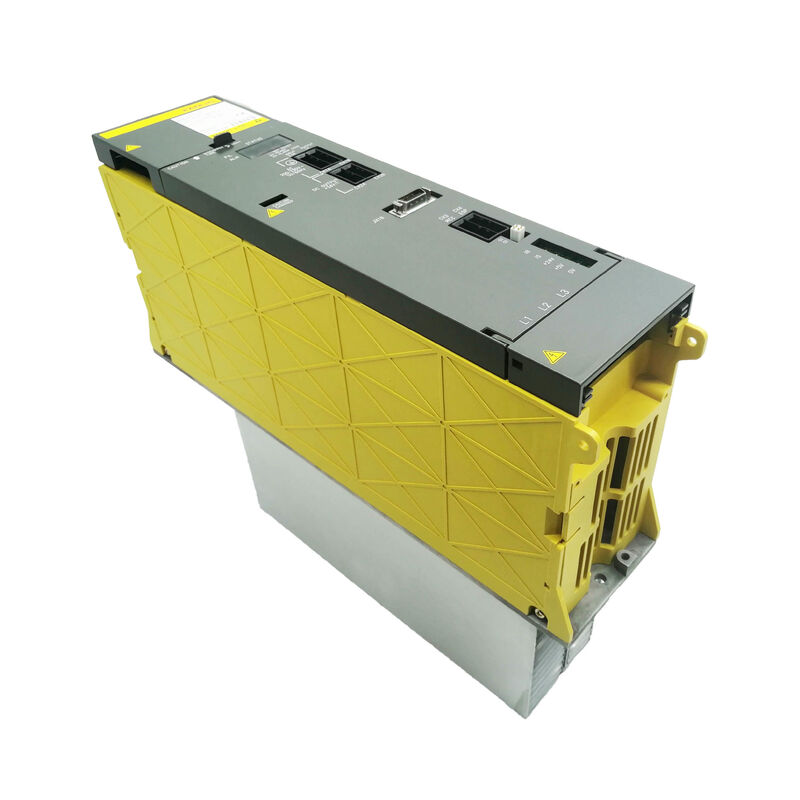
POWER SUPPLY MODULE A06B-6077-H111 AO6B-6O77-H111 A06B6077H111
  • POWER SUPPLY MODULE  A06B-6077-H111      AO6B-6O77-H111      A06B6077H111
  • POWER SUPPLY MODULE  A06B-6077-H111      AO6B-6O77-H111      A06B6077H111
  • POWER SUPPLY MODULE  A06B-6077-H111      AO6B-6O77-H111      A06B6077H111

POWER SUPPLY MODULE A06B-6077-H111 AO6B-6O77-H111 A06B6077H111

Place of Origin Japan
Brand Name FANUC
Certification Contact:Ms Amy SKYPE:sandesales01 EMAIL:sales01@sande-elec.com
Model Number A06B-6077-H111
Product Details
Condition:
New Factory Seal(NFS)
Item No.:
A06B-6077-H111
Origin:
Japan
Highlight: 

power supply analog input module

,

power supply input output module

Payment & Shipping Terms
Minimum Order Quantity
1 pcs
Packaging Details
original packing
Delivery Time
0-3 days
Payment Terms
T/T,PayPal,Western Union
Supply Ability
100 pcs/day
Product Description

Fanuc A06B-6077-H111 | Alpha Power Supply Module PSM-11 — 90mm Housing, 13.2kW, 150A Transistor, CNC & Robot Applications, Two Heatsink Variants — Specification & Procurement Guide


Overview

The Fanuc A06B-6077-H111 is a 90mm wide, 13.2kW alpha series power supply module that powers compact alpha drive systems across two distinct application domains: CNC machine tools and Fanuc industrial robots.

That dual-application footprint matters when sourcing replacement units, because a PSM-11 removed from a decommissioned machining centre may have accumulated a very different operating history from one removed from a robot installation — different thermal cycles, different duty patterns, different ambient conditions.

Understanding the module's specifications and the variables involved in sourcing a replacement with confidence is the focus of this article.

The PSM-11 contains a single 150A transistor module internally.

This is a practical detail that distinguishes it from the smaller PSM-5.5 (A06B-6077-H106) and from the larger A06B-6087 series that starts at PSM-15.

The 150A transistor provides the module with transient current headroom — at rated 49A AC input, the transistor is operating well below its peak capability, which contributes to the module's generally good service life under normal operating conditions. 

The 13.2kW continuous output rating is what the transistor can sustain thermally, not the electrical limit of the switching device itself.

Two hardware revisions exist.

Revision A uses wiring board A16B-2202-0461.

Revision B uses A16B-2202-0661. Both revisions use the same control PCB (A16B-2202-0420). Functionally, the two revisions are equivalent in the machine — the revision difference primarily reflects an internal design change, not a compatibility distinction at the system level.

For a buyer sourcing a replacement, either revision works in the machine. The revision is relevant only for board-level repair work where the correct replacement board must be matched to the specific unit being repaired.

One piece of information that many standard product listings omit but is operationally critical: the PSM-11 comes in two different heatsink configurations, and both are physically identical externally except for the heatsink mounting geometry at the base of the unit.

If the wrong variant is ordered, it will not mechanically fit the module mounting arrangement in the electrical cabinet.

Before ordering a replacement A06B-6077-H111, identify which heatsink variant the original module uses and confirm that the replacement matches.


Key Specifications

Parameter Value
Housing Width 90mm
Input Voltage 200–230V AC, 3-phase
Rated Input Current 49A at 200V
DC Bus Output 283–325V DC
Output Power 13.2kW
Transistor Module One × 150A
Wiring Board (Rev. A) A16B-2202-0461
Wiring Board (Rev. B) A16B-2202-0661
Control PCB A16B-2202-0420 (both revisions)
Fan A90L-0001-0422
Heatsink Variants Two types — verify before ordering
Applications CNC machines + Fanuc robots
CNC 16iTA/MA, 18iTA/MA, 21iTA/MA, 0-C/D, 16/18/21, 0i-A

90mm Housing — Physical Dimensions in Context

The PSM-11's 90mm wide housing is its defining physical characteristic when fitting it into an electrical cabinet.

The smaller PSM-5.5 (A06B-6077-H106) uses a 60mm chassis. The PSM-15 (A06B-6087-H115) steps up to 90mm, and the PSM-26 and above use 150mm.

The PSM-11, at 90mm, occupies the same slot width as the PSM-15 in cabinets that were not specifically designed around the narrower 60mm PSM-5.5 footprint.

This matters for retrofit and upgrade decisions.

A machine originally built with a PSM-5.5 has an electrical cabinet designed around the 60mm slot — upgrading to the PSM-11's 90mm chassis may or may not be possible depending on the adjacent components and available lateral space.

Conversely, a machine built for the PSM-15 can accept the PSM-11 in the same slot with additional lateral space remaining.

In cabinet space-constrained retrofit situations, the physical slot dimensions are often the deciding factor between available PSM models.

The module height and depth follow the standard alpha PSM format, making the PSM-11 mountable in the same rack structures used by other alpha series modules.

The external heatsink extends beyond the module body — its precise geometry is what varies between the two heatsink variants mentioned above.


The Two Heatsink Variants — Why This Matters Before Ordering

The existence of two physically distinct heatsink configurations on the A06B-6077-H111 is not widely documented in standard product listings, but it is practically significant for anyone fitting a replacement into a machine.

The heatsink attaches at the base/rear of the module and interfaces with the electrical cabinet's mounting structure.

The two variants have different mounting hole patterns or attachment geometries — not interchangeable without modification to the cabinet mounting, which is not an appropriate repair approach.

Before placing an order for a replacement A06B-6077-H111, photograph the original module's heatsink mounting geometry from the rear and bottom, and provide this information to the supplier. Reputable PSM-11 exchange specialists will be able to confirm which variant they are supplying.

This step is worth taking even if it adds a day to the process — discovering a dimensional mismatch after the machine has been opened and the original module removed costs far more in downtime than the verification step.

If the original module's heatsink configuration cannot be confirmed (the module has already been removed and the information is unavailable), a specialist with a physical unit on hand for comparison is the most reliable source.


PSM-11 vs PSM-5.5: Choosing the Right Power Class

The PSM-11 and PSM-5.5 (A06B-6077-H106) serve the same A06B-6077 series architecture and the same machine size category.

The 5.5 designation represents approximately 5.5kW of rated output versus the PSM-11's 13.2kW.

The selection between them is a power capacity calculation, not a functional compatibility question — both modules produce the same 283–325V DC bus and are compatible with the same alpha SVM and SPM amplifier families.

The calculation starts by identifying every SVM and SPM module on the machine's DC bus and finding its rated continuous output power.

Sum these values, then apply a simultaneity factor — typically 0.7 to 0.8, reflecting the reality that not all axes operate at full load simultaneously during normal cutting cycles. 

If the result falls below approximately 5kW, the PSM-5.5 is appropriately sized.

If it falls between 5kW and 12kW, the PSM-11 is the correct selection. If it exceeds 12kW, the machine needs the PSM-15 (A06B-6087-H115) or larger.

A second consideration beyond continuous power is the peak bus current during simultaneous axis acceleration.

The PSM-11's 150A transistor provides the peak current reserve for these transients, but if the machine's SVM/SPM combination demands very high simultaneous peak currents for short durations, the PSM-11's bus capacitor bank must handle the gap between the transistor's continuous delivery and the transient demand.

This is rarely an issue in PSM-11 applications by design, but it is worth calculating on machines with multiple high-inertia axes.


Robot Applications — A Different Operating Profile

The A06B-6077-H111 is used not only in CNC machine tools but also in Fanuc industrial robot systems. Robot applications impose a distinctly different operational profile on the PSM-11 compared to a CNC machining centre.

A robot's arm movements involve frequent acceleration and deceleration of multiple joints simultaneously, with the regeneration energy from decelerating joints returned to the DC bus and reused or returned to the AC supply through the PSM's active front end.

The duty cycle — the fraction of time the system is operating under load — is often higher in robot applications than in CNC milling, where the spindle and axes may be held at constant feed for extended cutting passes.

What this means for a used PSM-11 in the aftermarket: a unit that came from a robot installation in a high-cycle automotive welding or material handling line has likely experienced more thermal cycles and more IPM transistor switching events per unit of elapsed time than an equivalent unit from a low-volume CNC lathe.

Both have the same part number, but their accumulated wear histories are different. When sourcing a used unit and the provenance matters, asking the supplier whether the module came from a CNC machine or a robot application is a reasonable screening question.

Functionally, the PSM-11 in a robot system performs identically to its CNC machine role — the DC bus physics are the same, the alarms are the same, the board configuration is the same. The application context affects service life expectations, not installation or operation.


Exchange, Surplus, and Repair — Sourcing Paths Compared

Exchange: The most common aftermarket service model for the PSM-11.

A faulty module is sent to a specialist; a tested, warranted replacement is sent back in advance of or simultaneously with the faulty unit. Exchange pools are maintained by specialists who repair the incoming faulty units into the pool, so the cycle sustains itself as long as repairable cores are available.

Exchange is typically the fastest path to a working replacement and the best value when a tested, warranted unit is the priority.

Exchange warranties of 12 months are standard; some specialists offer longer.

Surplus: A unit removed from a decommissioned machine and sold with limited or no repair work performed.

Surplus units may be untested, tested-only, or cleaned and tested — the condition description varies by supplier. Surplus is lower cost than exchange but carries higher risk of receiving a unit that needs repair before it will run reliably.

Useful when the machine downtime window is not urgent and incoming testing is available in-house.

Repair: The original faulty unit is sent to a specialist for component-level diagnosis and repair.

Repair cost is typically lower than exchange, but turnaround time is longer (usually days to a week or more).

Repair is the correct approach when the unit is known to have a specific, recoverable fault (a failed fan, a known-failed transistor module) and the machine can afford the repair turnaround time.

The PSM-11 is a repairable module. The 150A transistor module inside is available as a separate spare part and can be replaced.

The fan (A90L-0001-0422) is standard and available. Neither main board is sold separately, so board-level failures route to exchange or to a specialist with component-level board repair capability.


FAQ

Q1: There are two heatsink variants — how do I find out which one my machine has before ordering a replacement?

The most reliable approach is to photograph the rear and bottom of the original PSM-11 while it is still in the machine, showing the heatsink mounting geometry clearly. Email these photographs to your intended supplier and ask them to confirm compatibility with the unit they have available.

If the module has already been removed and physical comparison is not possible, the machine's original electrical schematic or OEM documentation may reference the specific variant.

As a last resort, a PSM-11 specialist with stock of both variants can guide identification over the phone based on the cabinet arrangement details.


Q2: My machine's original PSM-11 is Revision A (A16B-2202-0461 wiring board). Can I fit a Revision B unit (A16B-2202-0661) as a replacement without any adjustment?

Yes. The functional output of both revisions is identical — same DC bus voltage, same power delivery, same alarm behaviour.

The revision change reflects a Fanuc internal design update, not a system-level difference that affects compatibility with the connected SVM and SPM modules or the CNC control. A Revision B PSM-11 can replace a Revision A unit without any parameter changes or wiring modifications.

The distinction is only relevant when performing board-level repair and needing to source the correct replacement wiring board.


Q3: The machine uses the PSM-11 to power one SVM1-40 (A06B-6079-H103) and one small SPM. Is the PSM-11 adequately sized, or is the PSM-5.5 sufficient?

The SVM1-40's rated axis current corresponds to approximately 5.5–7kW of servo motor output depending on the specific motor connected. Adding the SPM's spindle output power to this, the combined load almost certainly exceeds the PSM-5.5's ~5.5kW rating at simultaneous operation.

The PSM-11 at 13.2kW covers this combination with meaningful headroom.

The PSM-5.5 would be undersized and likely produce AL04 voltage drop alarms during periods of simultaneous heavy loading. The PSM-11 is the correct selection for this configuration.


Q4: This PSM-11 is going into a Fanuc robot, not a CNC machine. Are there any configuration differences?

No. The PSM-11 in a robot installation uses exactly the same hardware, produces the same DC bus, and operates with the same alarm codes as in a CNC application.

The robot controller interacts with the SVM modules on the bus rather than a CNC servo card, but the PSM-11's role — providing and regulating the DC bus — is identical.

There are no jumpers, switches, or parameters within the PSM-11 that differ between CNC and robot applications.


Q5: A supplier is offering a PSM-11 described as "tested, no alarm." Is this sufficient assurance for a production machine?

"Tested, no alarm" at static bench power-up is a useful data point but not comprehensive assurance.

A static test confirms the module powers up without fault and that the bus voltage appears within specification at no load.

It does not verify transistor performance under actual load current, fan airflow adequacy at operating temperature, or pre-charge behaviour across the full temperature range the module will see in service. 

For a production machine where reliability is critical, source from a supplier who tests under load — ideally on an actual Fanuc alpha drive system with appropriate SVM and motor loads — and offers a meaningful warranty (12 months minimum from time of installation, not just from date of shipment).

The price difference between a static-tested surplus unit and a load-tested exchange unit is real, but so is the difference in confidence.


POWER SUPPLY MODULE  A06B-6077-H111      AO6B-6O77-H111      A06B6077H111 0

POWER SUPPLY MODULE  A06B-6077-H111      AO6B-6O77-H111      A06B6077H111 1


Contact Us at Any Time

+86 18620505228
10/F,Jia Yue Building, Chebei Road,Tianhe district,Guangzhou,China
Send your inquiry directly to us