logo
Guangzhou Sande Electric Co.,Ltd.
Email Sales01@sande-elec.com TEL: 86--18620505228
Home > Products > Servo Motor Driver >
Power Supply A06B-6087-H137 A06B6087H137 AO6B-6O87-H137
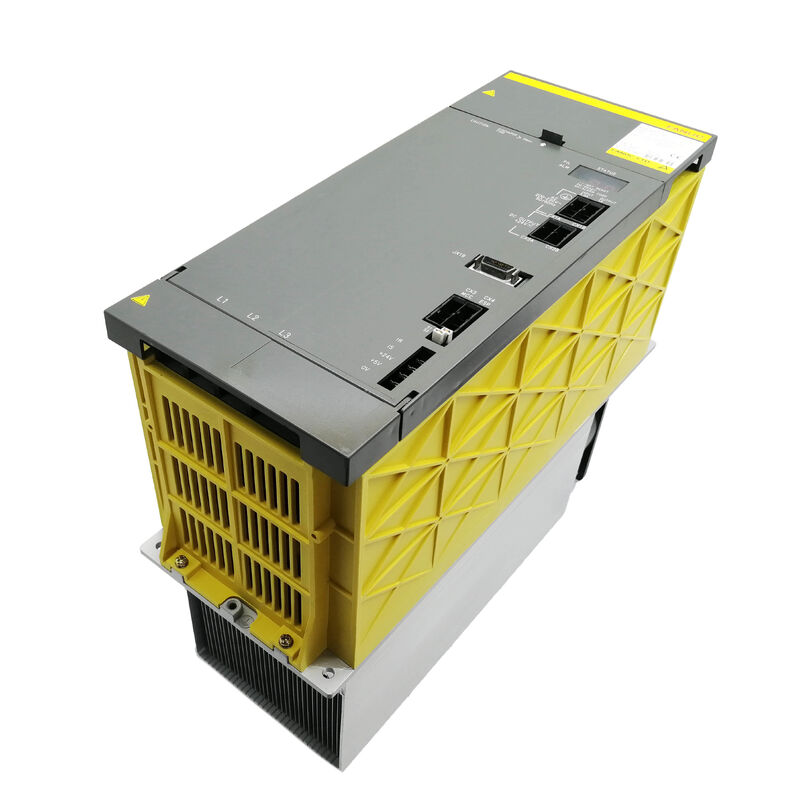
  • Power Supply  A06B-6087-H137  A06B6087H137  AO6B-6O87-H137
  • Power Supply  A06B-6087-H137  A06B6087H137  AO6B-6O87-H137

Power Supply A06B-6087-H137 A06B6087H137 AO6B-6O87-H137

Place of Origin Japan
Brand Name FANUC
Certification CE ROHS
Model Number A06B-6087-H137
Product Details
Condition:
New Factory Seal(NFS)
Item No.:
A06B-6087-H137
Origin:
Japan
Highlight: 

power supply analog input module

,

power supply input output module

Payment & Shipping Terms
Minimum Order Quantity
1 pcs
Packaging Details
original packing
Delivery Time
0-3 days
Payment Terms
T/T,PayPal,Western Union
Supply Ability
100 pcs/day
Product Description

Fanuc A06B-6087-H137 | Alpha Power Supply Module PSM-37 — 43kW, 200–230V AC 3-Phase, 150A Input, 283–325V DC Bus, Active Regeneration, CNC 16i / 18i / 21i


Overview

The Fanuc A06B-6087-H137 is the PSM-37 — the 43kW continuous-rated power supply module in the A06B-6087 alpha series. It occupies the upper middle of the alpha PSM range, positioned above the PSM-26 (29.8kW) and PSM-30 (36kW), and below the PSM-45 and PSM-55.

This power class serves a specific need: machines that are large enough to require a high-power spindle and multiple servo axes at once, but not so large as to demand the physically bigger 300mm wide PSM-45 housing. 

The PSM-37 delivers its 43kW into a 150mm wide module — the same footprint as the PSM-15 and PSM-26 — which is an important cabinet space consideration on large machining centres where electrical cabinet volume is constrained.

At 150A rated input at 200V, the PSM-37 is the largest module in the A06B-6087 family that maintains the 150mm wide housing.

This matters for machine builders and retrofit engineers because the PSM-37 can replace a PSM-15, PSM-26, or PSM-30 in the same cabinet slot without any mechanical modification — the modules share the same mounting arrangement and DC bus connection configuration. When a machine's spindle or axis loading requires more power than a PSM-26 or PSM-30 can provide, the PSM-37 is the next step up without changing the drive rack physical layout.

The three IGBT transistor modules inside the PSM-37 are responsible for the active regeneration function that distinguishes the PSM family from the PSMR (resistor discharge) alternative. As servo and spindle motors decelerate, their kinetic energy flows back toward the DC bus.

The PSM-37's active front end detects the rising bus voltage and switches its IGBT stage to invert — feeding the regenerated energy back into the three-phase AC supply rather than dumping it into braking resistors.

For large machining centres with heavy spindle inertia and frequent rapid-position tool changes, this regeneration function meaningfully reduces the thermal load inside the electrical cabinet across a full production shift.

The A06B-6087-H137 is most commonly found in large-frame machining centres, turning centres with live tooling, 5-axis machining systems, and multi-axis transfer line equipment — applications that combine a powerful spindle amplifier module with three or more servo axis amplifiers, demanding total simultaneous power delivery approaching or exceeding the capacity of the PSM-26 class.


Key Specifications

Parameter Value
Module Designation PSM-37
Rated Input Voltage 200–230V AC, 3-phase
Rated Input Current 150A at 200V
Input Frequency 50/60Hz
Rated DC Bus Output 283–325V DC
Rated Output Power 43kW
Module Width 150mm
Transistor Modules Three IGBT units
Wiring Board A20B-1006-0472
Control Card A16B-2202-042x
External Fan A90L-0001-0335/B
Internal Fan A90L-0001-0422
Regeneration Active (energy returned to AC supply)
CNC Series 0-D, 15, 16i, 18i, 21i

PSM-37 in the Alpha Power Class Hierarchy

The A06B-6087 series spans from the PSM-15 (17.5kW, 63A) through the PSM-55 (63kW+), with the PSM-37 sitting as the highest-power module that still fits within the 150mm chassis.

Understanding where the PSM-37 sits in this hierarchy is directly relevant to selection and substitution decisions.

When a machine running a PSM-26 experiences frequent AL01 overcurrent alarms under heavy simultaneous axis loading — a symptom of the PSM being operated close to or at its continuous current limit — upgrading to the PSM-37 in the same physical module slot is a viable and straightforward solution.

The PSM-37's additional 13kW of continuous headroom (43kW vs 29.8kW) and higher input current rating (150A vs 106A) provide meaningful margin against the overload condition without requiring changes to the drive rack layout or DC bus wiring.

Conversely, when a PSM-37 fails in a machine that was operating well within its 43kW capacity, and a PSM-26 is the only available replacement, the PSM-26 may function adequately in a machine whose actual concurrent power demand is within 29.8kW — a useful emergency option to consider while the correct PSM-37 is sourced.


Thermal Management at 150A

Handling 150A of AC input current while maintaining the regulated DC bus within the 283–325V range generates substantial heat in the three IGBT transistor modules.

The PSM-37's thermal design uses the same three-path approach as the smaller modules in the A06B-6087 family: the external finned heatsink conducts heat from the IGBT module mounting surfaces outward to the ambient air; the external fan drives airflow through the heatsink fins; and the internal fan maintains air circulation within the module housing to prevent hot spots on the control card and wiring board.

The 150mm module width is reached at the PSM-37 power class partly because of the thermal engineering — the finned heatsink area must be large enough to reject the heat generated at 150A input without raising transistor junction temperatures above the rated limit under worst-case ambient conditions.

The PSM-45 and above require a wider housing (300mm) because the transition to 185A+ input current demands a larger heatsink surface area than the 150mm chassis can accommodate.

At 150A input, the facility supply circuit ahead of the PSM-37 requires careful sizing.

A 200A circuit breaker (thermal-magnetic type with appropriate time-current curve for the startup inrush transient) is the typical minimum rating. Cable cross-sections for 150A continuous at the installation's ambient temperature and conduit fill must be calculated to relevant electrical standards.

The recommended AC reactor helps limit inrush at startup and attenuates harmonic distortion that the rectifier front end would otherwise inject into the facility power supply.


Internal Boards and Serviceable Components

The PSM-37's internal architecture follows the same service philosophy as the rest of the A06B-6087 series: the transistor modules, both cooling fans, DC bus fuses, and battery pack are available as separate spare parts.

The three IGBT transistor modules inside are a different specification than those in the smaller PSM-15 and PSM-26 — they are higher-rated units appropriate to the 150A input class. 

The wiring board (A20B-1006-0472, or A20B-2902-0390 in some revisions) and control card (A16B-2202-042x) are the non-separable boards; if either fails beyond component-level repair, the module requires exchange or specialist board repair.


FAQ

Q1: Can the A06B-6087-H137 PSM-37 replace a faulty PSM-26 (A06B-6087-H126) directly in the same drive rack?

Yes, in terms of physical mounting and DC bus connection. The PSM-37 and PSM-26 share the same 150mm wide chassis format and the same DC bus connection points, so the PSM-37 physically replaces the PSM-26 in the same rack slot without mechanical modification.

The PSM-37 will power the existing alpha SVM and SPM modules connected to the bus.

If the machine was operating within the PSM-26's 29.8kW capacity before the failure, the PSM-37's additional 43kW headroom is comfortable margin — there is no risk in using a higher-rated PSM on a lower-demand system. Confirm the facility supply circuit ahead of the PSM can deliver 150A before powering up.


Q2: What fault conditions specifically trigger AL01 on the PSM-37, and how does this differ from the PSM-15 class?

On the PSM-37 (and other PSM-15 to PSM-30 class units), AL01 indicates overcurrent in the main AC input circuit — the three-phase current drawn by the rectifier section has exceeded the protection threshold. This is the same meaning as on the PSM-15.

Distinguish from AL01 on the smaller PSM-5.5 and PSM-11 units where AL01 indicates an IPM internal fault. For the PSM-37, AL01 diagnosis starts with the three-phase supply: check voltage balance across all three phases, inspect input fuses and the AC reactor, and verify no short circuit exists in the DC bus or downstream amplifier modules.

If the alarm persists with all SVM and SPM modules disconnected from the bus, the fault is internal to the PSM-37.


Q3: The PSM-37 manual number is B-65162 — does this same manual cover the PSM-26 and PSM-45 as well?

Yes. The Fanuc manual B-65162 covers the complete A06B-6087 alpha series power supply module range including the PSM-15, PSM-26, PSM-30, PSM-37, PSM-45, and PSM-55.

Alarm codes, wiring diagrams, component layouts, and startup procedures documented in B-65162 apply across the family, with specific callouts where behaviour differs by module class.

This common documentation is one of the practical advantages of the A06B-6087 family for maintenance engineers who work across multiple machine sizes.


Q4: Is external forced cooling required for the PSM-37, or does the built-in fan system handle all thermal management?

The PSM-37 is self-cooling through its built-in fan system — no external forced air supply to the module is required.

The external fan (A90L-0001-0335/B) draws ambient air from outside the module across the external heatsink; the only requirement is that the electrical cabinet provides adequate airflow across the module's external surfaces. 

The cabinet ambient temperature must remain within the module's specified operating range (typically 0–55°C) and cabinet air must not be recirculated — cabinet temperature will rise if hot exhaust air is drawn back into the inlet.

The PSM-45 and PSM-55, by contrast, require ducted external forced cooling in addition to their built-in fans, which is one reason the PSM-37 is specifically noted as the boundary of the self-cooled module range.


Q5: What CNC series and alpha amplifier families are compatible with the PSM-37 DC bus?

The PSM-37 provides the DC bus for the entire range of alpha series SVM servo amplifier modules (A06B-6079, A06B-6096 FSSB families) and SPM spindle amplifier modules (A06B-6088, A06B-6102 families) used with Fanuc Series 0-D, 15, 16i, 18i, and 21i controls.

This same alpha power supply generation is not compatible with the alpha i (A06B-6114 SVM) or beta i series drive systems, which use the A06B-6110 aiPS power supply generation.

Any machine configuration mixing alpha amplifiers (powered by the A06B-6087 PSM family) with alpha i amplifiers (requiring the A06B-6110 aiPS) cannot share the same DC bus.

Power Supply  A06B-6087-H137  A06B6087H137  AO6B-6O87-H137 0


Contact Us at Any Time

+86 18620505228
10/F,Jia Yue Building, Chebei Road,Tianhe district,Guangzhou,China
Send your inquiry directly to us