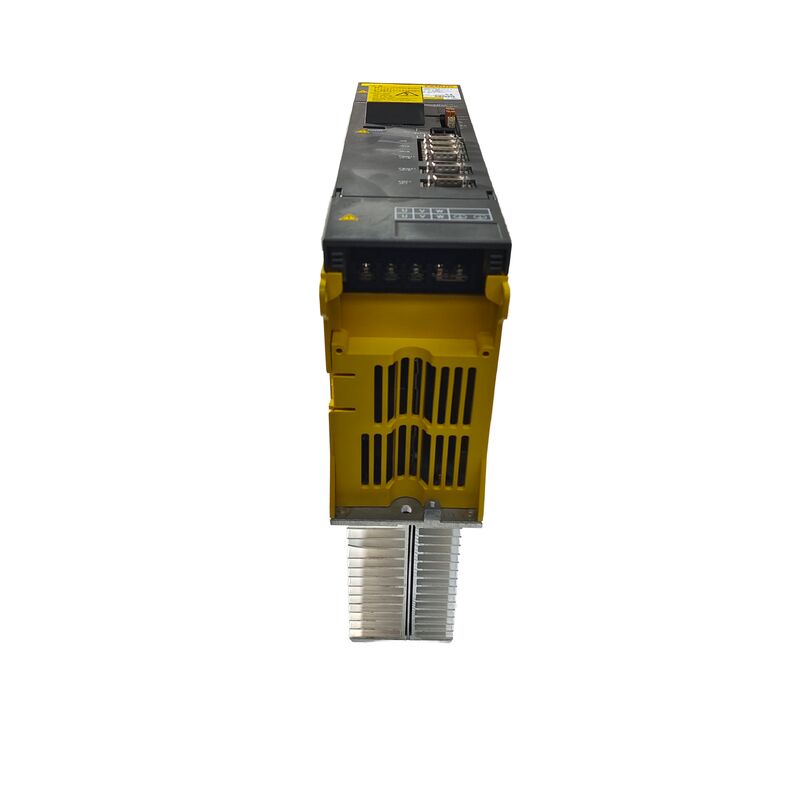
FANUC A06B-6079-H104 Alpha Servo Module SVM1-40L
Overview
The A06B-6079-H104 is a single-axis FANUC Alpha servo amplifier module identified as SVM1-40L. Public Alpha-series documentation maps this exact order code to the SVM1-40L class, and replacement-market listings consistently treat it as a single-axis Alpha servo module used in CNC and industrial motion systems.
That makes it a defined family-specific drive component rather than a generic amplifier that can be described only by power rating.
In practical machine support, a module like this is selected when the goal is to preserve the original servo-drive architecture and restore the intended axis behavior of the machine. Its role is less about broad feature expansion and more about correct integration into an existing FANUC Alpha system, where axis matching, cabinet fit, and family compatibility are central to a successful replacement.
This is also why the cleanest product-page positioning is precise and restrained.
A06B-6079-H104 is best described as a FANUC Alpha single-axis servo module SVM1-40L for CNC replacement and motion-control support.
That style matches how technical buyers evaluate older servo amplifiers and avoids turning a clearly defined service component into vague marketing copy.
Key Specifications
| Parameter |
Value |
| Part Number |
A06B-6079-H104 |
| Product Type |
Servo amplifier module |
| Series |
Alpha |
| Model Designation |
SVM1-40L |
| Axis Configuration |
Single axis |
| Rated Input |
283 to 325 V |
| Power Rating |
3.75 kW |
| Max. Voltage Out |
230 V |
| Manual Reference |
B-65162 |
Single-Axis SVM1-40L Positioning
One of the most useful practical details about A06B-6079-H104 is that it sits in the SVM1 family as a single-axis module.
In actual CNC cabinets, that matters because a single-axis Alpha amplifier is chosen not only for power class, but for how it fits the original machine’s servo layout and control logic. For engineers and maintenance teams, the family designation is often just as important as the order code.
The 40L designation also gives the page a more credible technical anchor than a generic description like “servo amp.”
It helps the listing speak to buyers who already know the machine family they are supporting and want confirmation that the part belongs to the correct Alpha module class.
Replacement Use and Practical Support Value
Public market references consistently position this model in repair, exchange, and replacement channels.
That aligns with how older FANUC Alpha servo modules are typically purchased: not as a new general automation platform, but as a machine-support part that restores known axis behavior in installed equipment.
For product-page writing, that means the most useful message is practical: correct order code, correct SVM family, correct input class, and correct machine role.
Buyers sourcing this model are usually trying to minimize downtime and avoid compatibility surprises, so a precise description has more value than a purely promotional one.
FAQ
Q1: What kind of product is A06B-6079-H104?
It is a FANUC Alpha single-axis servo amplifier module identified as SVM1-40L. In practical terms, it is used as a dedicated servo-drive component in CNC systems and other motion-control equipment built around the Alpha platform.
Q2: Why is the SVM1-40L designation important?
It confirms the module’s place within the Alpha single-axis servo family and helps distinguish it from other SVM1 variants. For replacement work, that designation is valuable because the original machine often depends on a specific module size and class rather than on a general amplifier category.
Q3: Is this module mainly a replacement part?
Yes. Public listings and service channels consistently present it as a repair, exchange, or replacement item for installed FANUC equipment.
That is typical for legacy CNC servo modules where continuity of the original machine architecture matters more than new-feature adoption.
Q4: What should buyers verify before ordering?
Buyers should verify the exact part number, SVM1-40L designation, input-voltage class, power rating, and the original Alpha drive configuration used in the machine.
Matching only the base series is not enough; the specific amplifier class and installation role should also be confirmed.


 Your message must be between 20-3,000 characters!