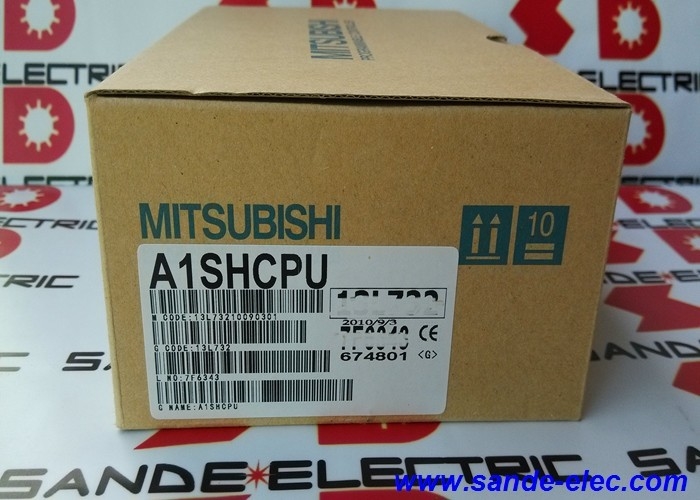
Mitsubishi A1SHCPU | MELSEC-A AnS Series PLC CPU Unit — 8K Steps / 256 I/O / 0.33 µs
Part Number: A1SHCPU
Manufacturer: Mitsubishi Electric (Japan)
Product Type: PLC CPU Unit — Modular Rack-Based Product Family: MELSEC-A AnS Series Program Capacity: 8K steps I/O Points: 256 Device I/O Points: 2,048 LD Processing Speed: 0.33 µs Memory: Built-in RAM + memory cassette slot (E2PROM / EP-ROM cassettes supported)
The A1SHCPU in an AnS Control Cabinet
The A1SHCPU is the higher-performance CPU unit in Mitsubishi's MELSEC-A AnS family — the rack-mounted controllers that were widely deployed in machine automation, utility panels, and production equipment through the 1990s and 2000s. At 0.33 µs per LD instruction, it sits above the standard A1SCPU in processing speed, making it the right choice for AnS applications where program scan time matters.
It is a dedicated CPU module, not a standalone integrated controller. That means it lives in a modular MELSEC-A rack alongside separate I/O modules, specialty cards, and communication modules. The CPU handles execution; the rack architecture handles I/O distribution. For anyone maintaining an existing MELSEC-A cabinet, that distinction is important — the A1SHCPU replaces the CPU slot, and the rest of the rack stays untouched.
The 8K-step program capacity is one of the first things to verify before ordering. It defines how much ladder logic the CPU can hold. If the original machine program fits within 8K steps (which it almost certainly does if the original CPU was also an A1SHCPU), a like-for-like replacement works without modification. The 2,048 device points refer to the internal data registers, bit devices, and timer/counter elements the program can use — a larger count than some other AnS models, giving the A1SHCPU slightly more headroom for programs with complex data handling.
Memory cassette support is worth noting for maintenance planning. An E2PROM cassette acts as non-volatile program storage, so the program survives a battery failure without data loss. If the installed system already uses a cassette, the replacement A1SHCPU supports it directly.
Key Specifications
| Parameter |
Value |
| Part Number |
A1SHCPU |
| Series |
MELSEC-A AnS |
| Program Capacity |
8K steps |
| I/O Points |
256 |
| Device I/O Points |
2,048 |
| LD Speed |
0.33 µs |
| Memory |
Built-in RAM + cassette slot |
| Cassette Types |
E2PROM, EP-ROM |
FAQ
Q1: What is the difference between A1SHCPU and A1SCPU?
The A1SHCPU processes instructions faster — 0.33 µs vs 0.48 µs per LD instruction for the standard A1SCPU. Both share the same 256 I/O point scale and AnS rack compatibility, but the A1SHCPU is the higher-performance variant. If the original unit is an A1SHCPU, replace it with an A1SHCPU — substituting the slower A1SCPU changes the program scan time, which can affect timing-sensitive machine sequences.
Q2: Can the A1SHCPU run the original machine program without modification?
Yes, provided the program fits within 8K steps and uses only device types supported by the AnS CPU family. For most legacy installations where the original CPU was also an A1SHCPU, a like-for-like swap restores operation without any programming changes. Back up the program from the installed CPU before replacement.
Q3: Does the A1SHCPU need a memory cassette, or does it work without one?
The built-in RAM holds the program and parameters without a cassette. A cassette adds non-volatile backup — useful if the CPU battery fails or during transport. Whether the installed system uses a cassette depends on how the original machine was set up. Check before removing the old CPU.
Q4: What programming software supports the A1SHCPU?
GX Developer is the standard Mitsubishi programming tool for MELSEC-A series CPUs. Older installations may also have been set up using SW5D5-GPPW or similar legacy tools. The program format is standard MELSEC-A ladder and uses the same device addresses across the AnS family.
Q5: What should be confirmed before ordering?
Confirm the installed CPU part number from the unit's label, verify the program fits within 8K steps, check whether a memory cassette is in use, and confirm the rack is an AnS-series base unit. The A1SHCPU will not fit older A-series racks that use a different slot width.


 Your message must be between 20-3,000 characters!